When people hear the term Visual Merchandising (VM), they often imagine attractive window displays, neatly arranged shelves, or beautifully decorated retail stores. While aesthetics are certainly important, they are only the visible outcome of a much larger strategy. In reality, effective Visual Merchandising is designed to influence customer behavior, improve the shopping experience, and ultimately increase sales performance.
The most successful retail brands do not treat VM as decoration. They treat it as a commercial tool.
Visual Merchandising Begins With Business Objectives
Every display inside a retail environment should answer a business question.
- Which products should customers notice first?
- How can we encourage shoppers to stay longer?
- What products should be purchased together?
- Which campaign needs the strongest visibility?
Instead of simply making a store “look nice,” Visual Merchandising organizes the entire customer journey. Product placement, lighting, signage, fixture design, circulation flow, and storytelling all work together to guide purchasing decisions.
A well-designed retail environment reduces friction, creates discovery, and helps customers make decisions naturally.
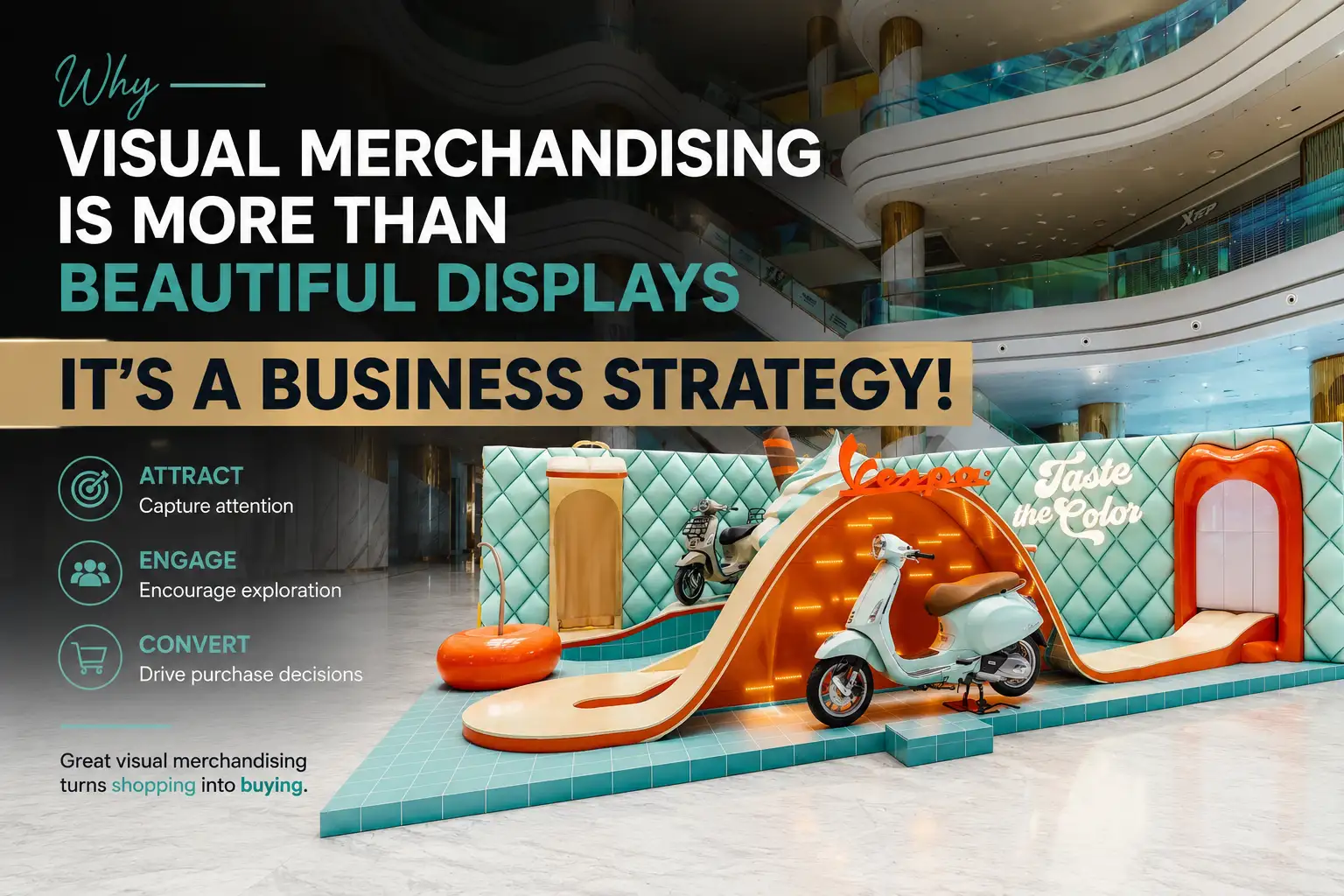
The Three Core Objectives of Visual Merchandising
Every successful VM strategy is built around three primary goals.
1. Attract

The first challenge is getting customers to stop.
Window displays, storefront design, promotional zones, seasonal installations, and hero products all compete for attention within just a few seconds. A strong first impression increases store traffic by encouraging passersby to enter.
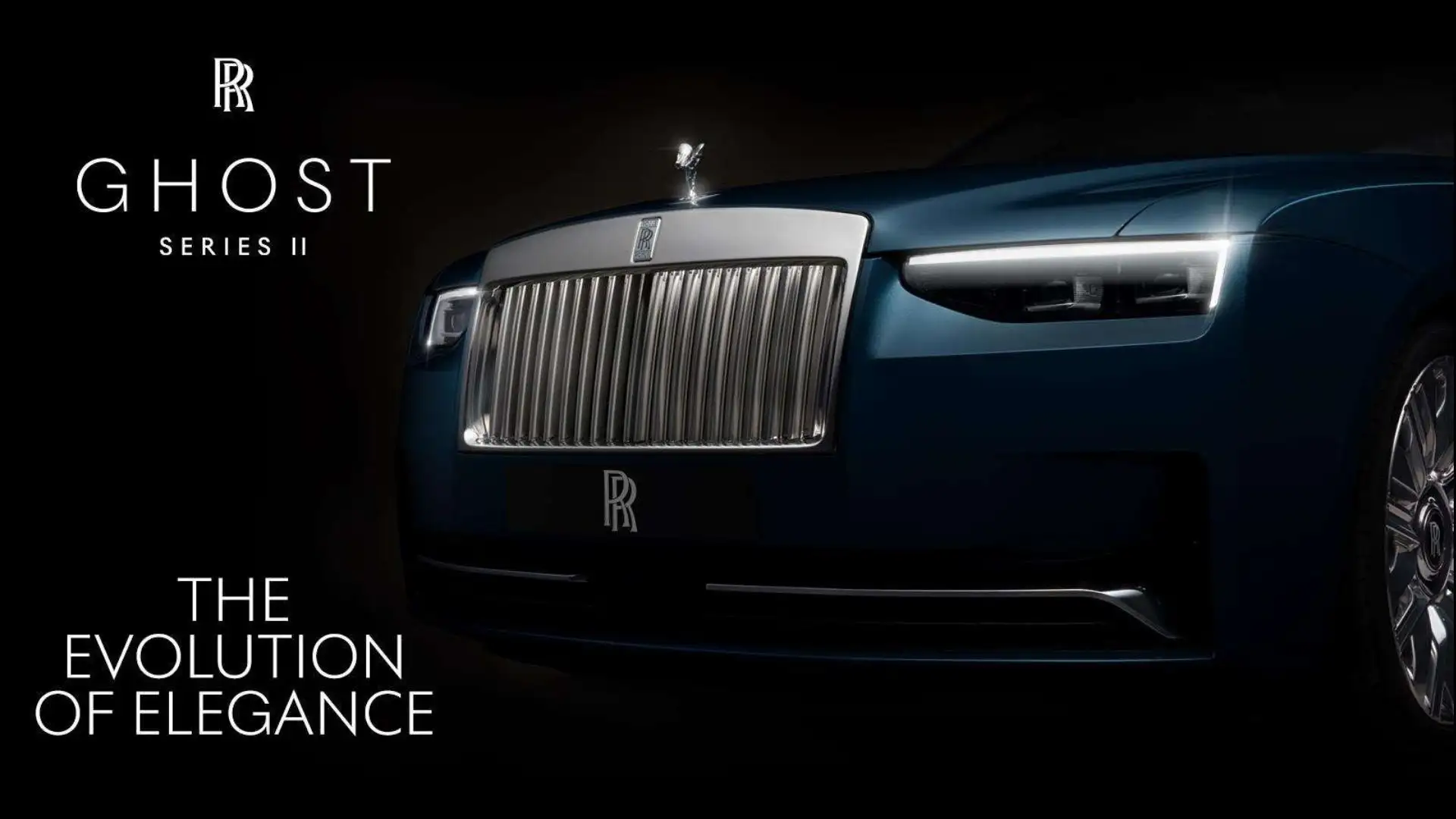
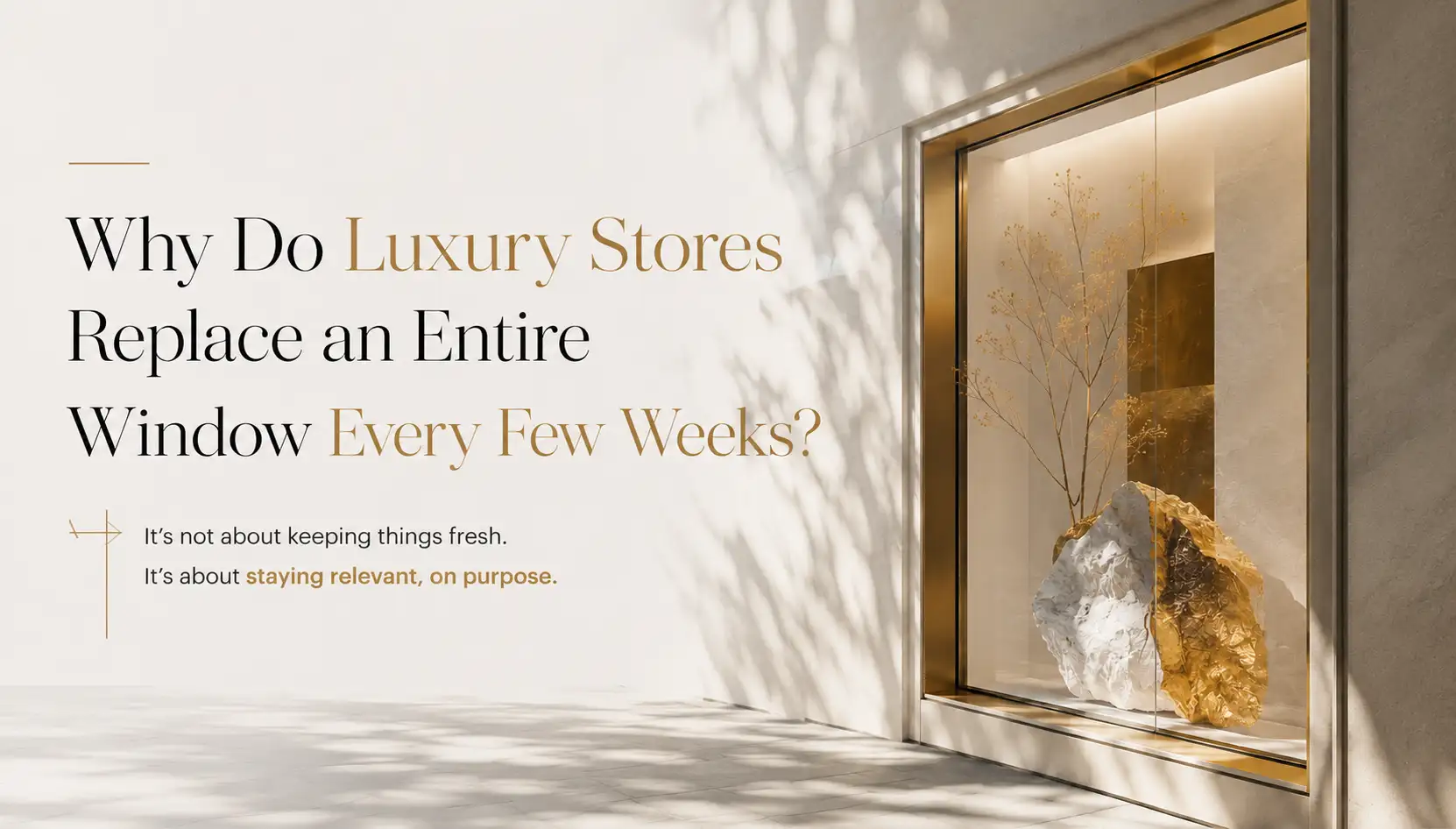
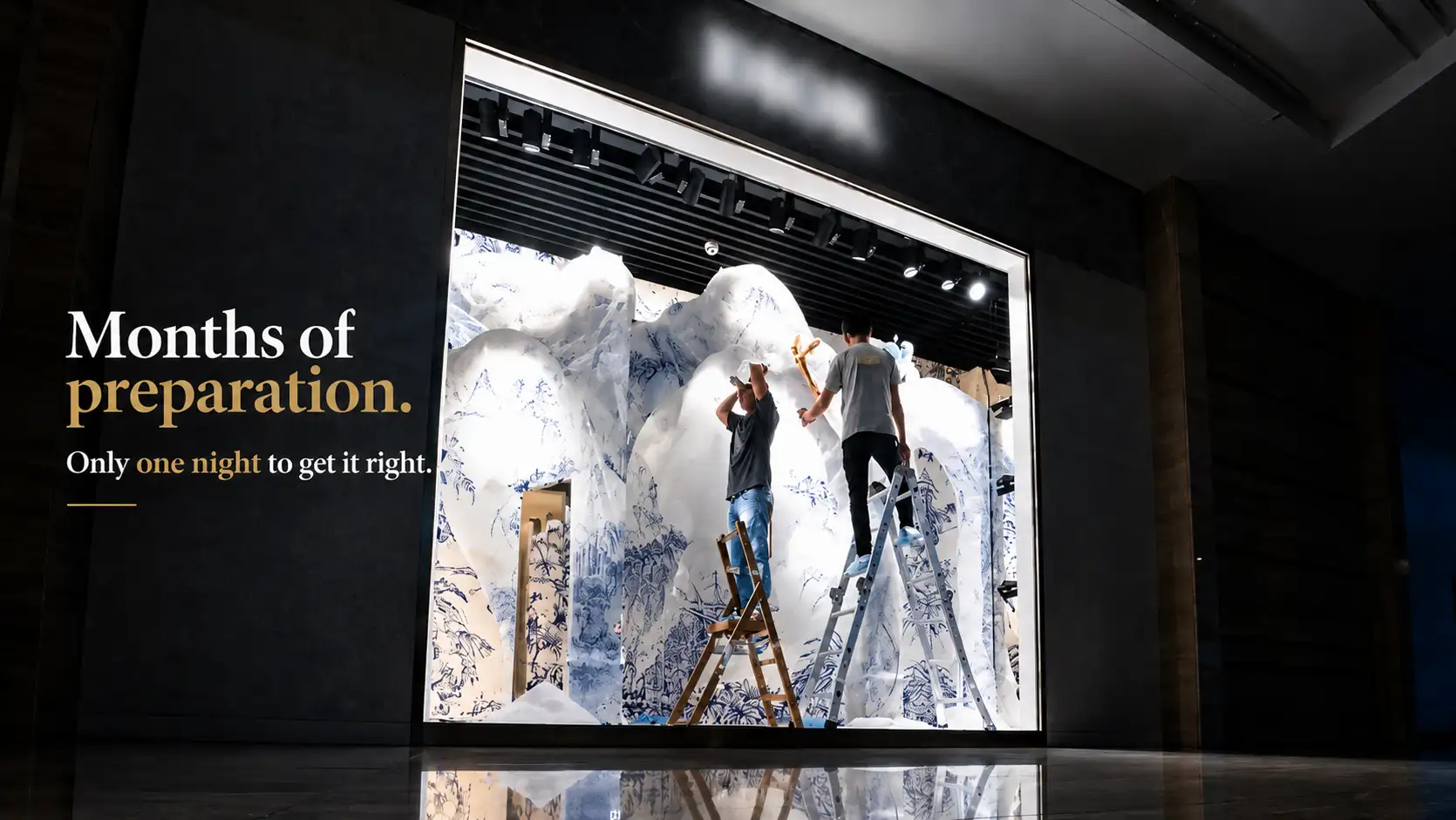
Luxury brands such as Louis Vuitton or Dior regularly redesign their storefronts several times each year—not simply for aesthetics, but because fresh visual campaigns continually attract new visitors and reinforce brand relevance.
2. Engage
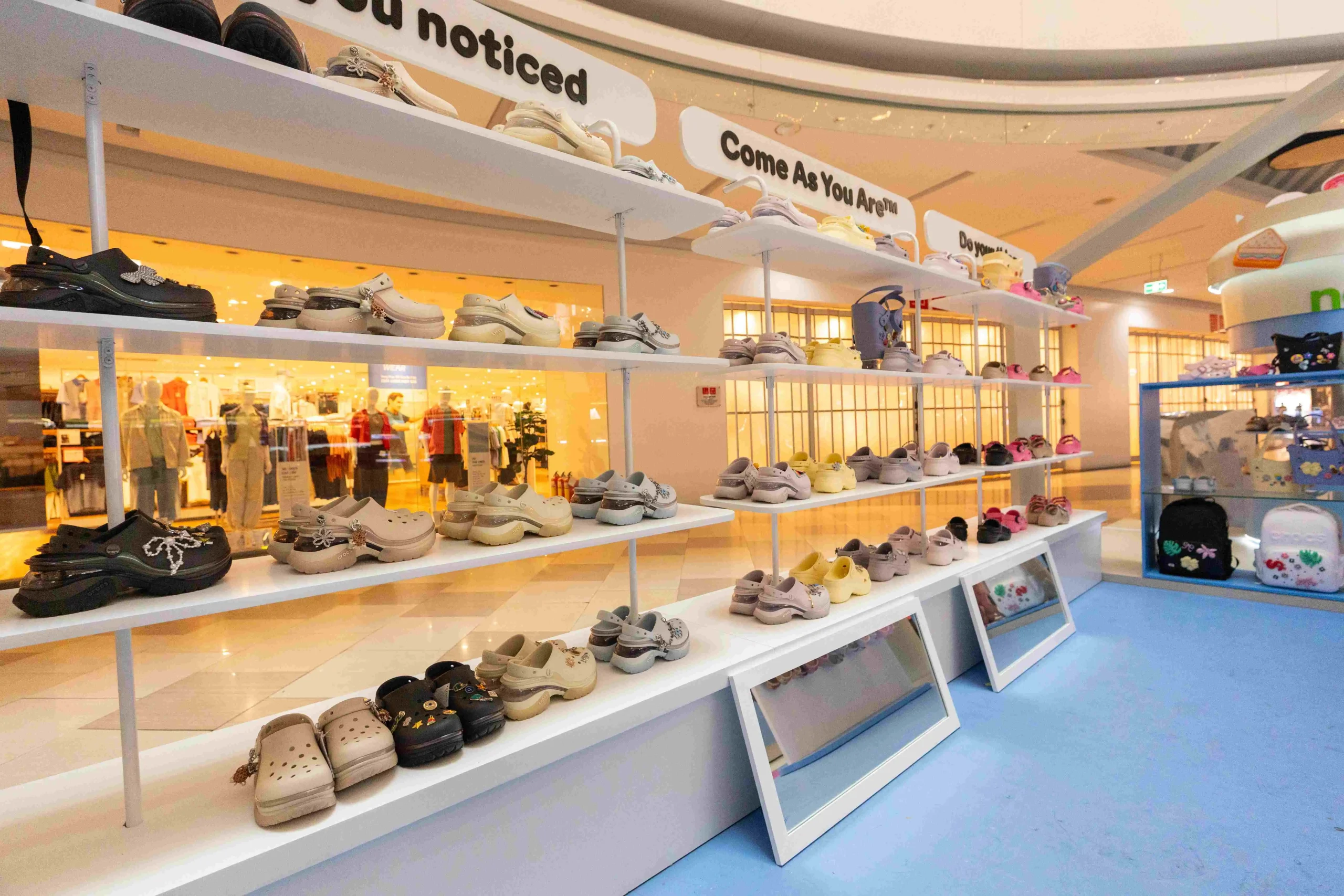
Once customers enter the store, Visual Merchandising should encourage exploration.
Clear navigation, logical product grouping, attractive feature displays, and comfortable circulation all help customers spend more time inside the retail space. The longer customers remain engaged, the greater the opportunity for product discovery.
Rather than overwhelming shoppers with excessive products, effective VM creates clarity. Customers instinctively understand where to look, what belongs together, and what deserves attention.
3. Convert
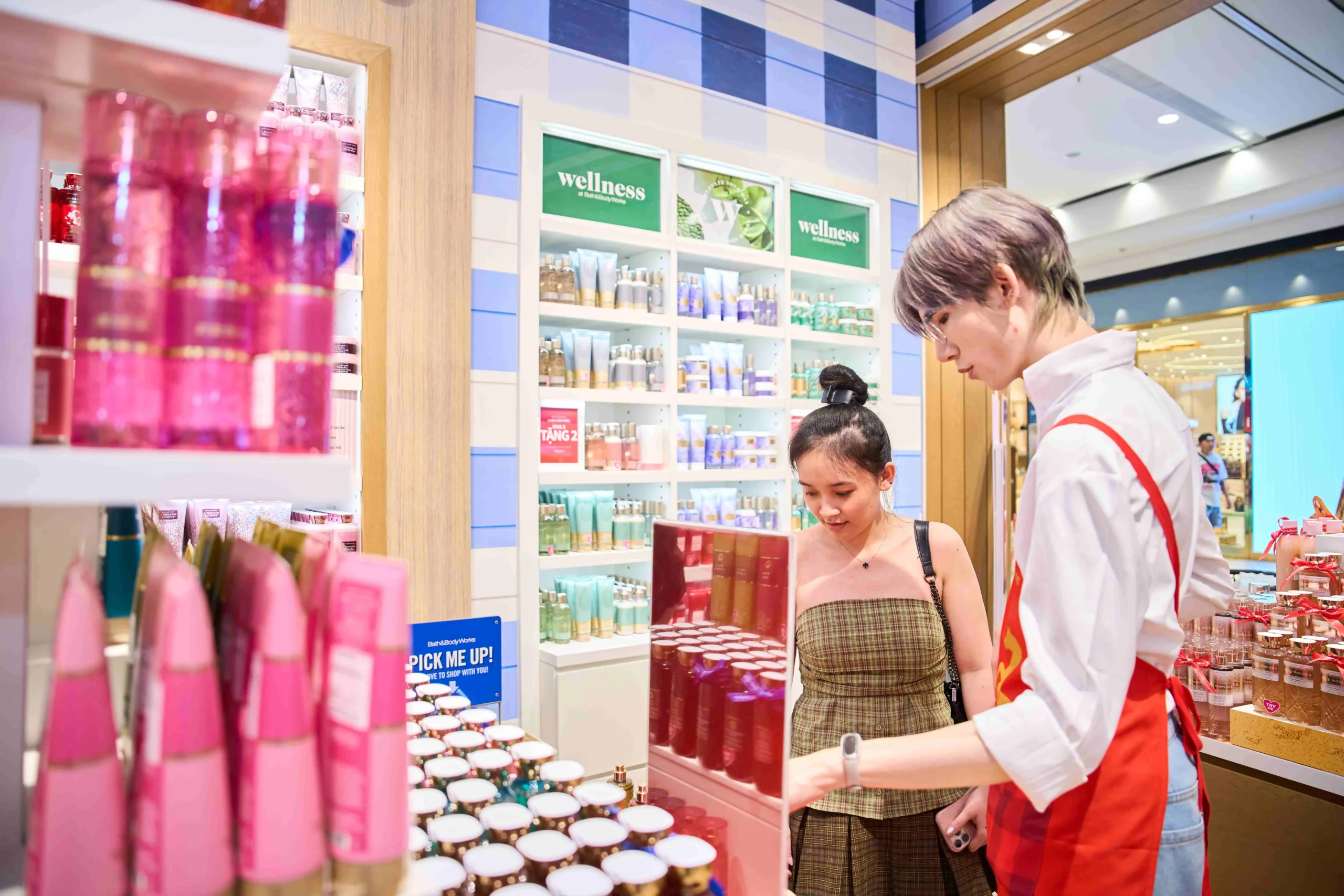
The final objective is sales.
Strategic product placement significantly influences purchasing decisions. Promotional products positioned within high-traffic zones consistently outperform identical products placed in secondary areas.
Cross-merchandising is another powerful example. A premium tumbler displayed alongside reusable straws, cleaning brushes, or carrying pouches often generates multiple-item purchases instead of a single transaction.
In this way, Visual Merchandising directly contributes to higher conversion rates and larger basket sizes.
A Simple Example
Imagine two stores selling exactly the same products at the same prices.
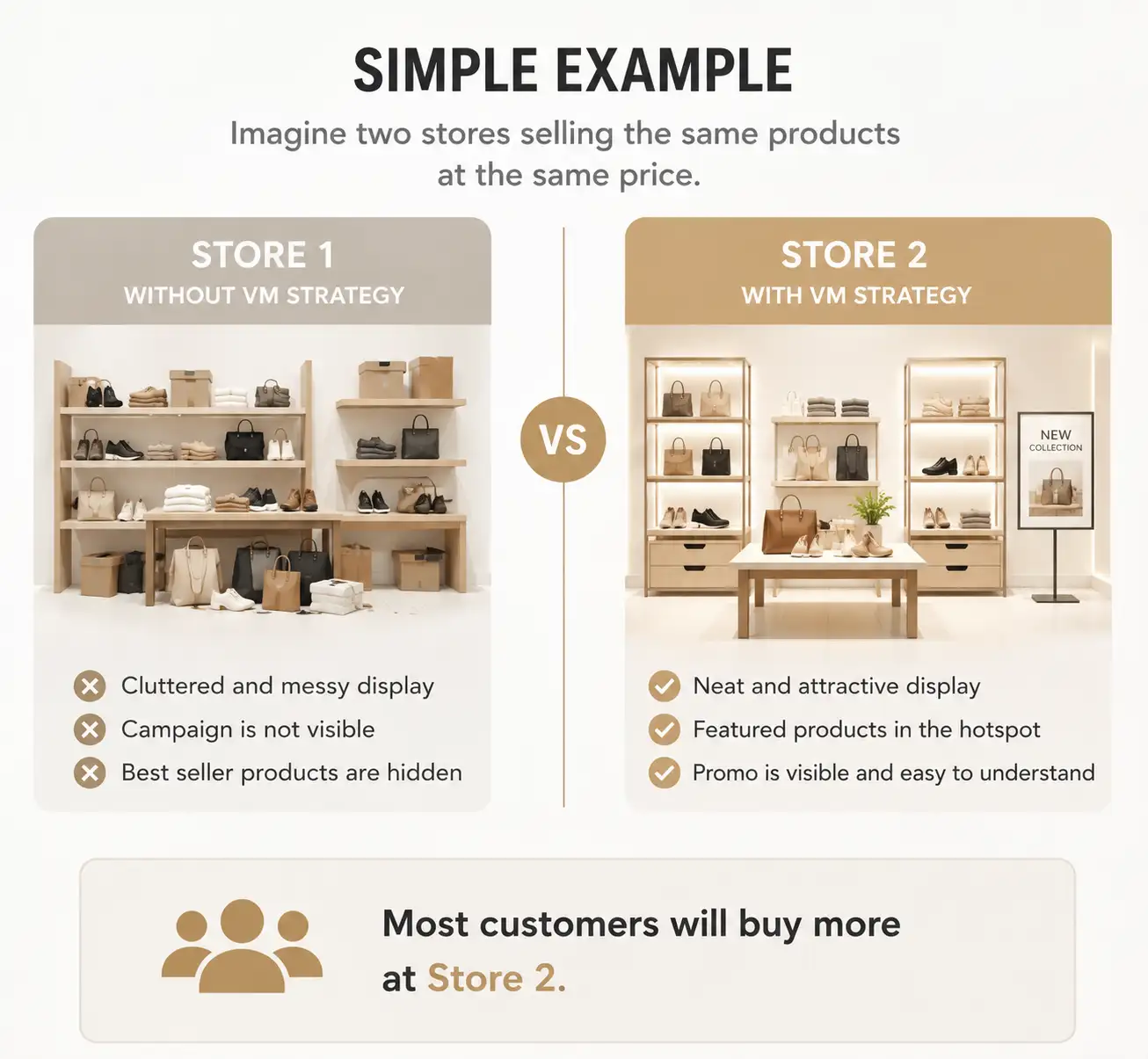
The first store has cluttered shelves, inconsistent product placement, and promotional items hidden throughout the space. Customers struggle to find what they need and quickly leave.
The second store uses a clear Visual Merchandising strategy. Best-selling products are positioned at eye level, promotional items occupy feature displays, complementary products are grouped together, and the shopping path naturally guides customers through multiple categories.
Although both stores offer identical merchandise, customers are far more likely to purchase—and purchase more—in the second environment.
The difference is not the product. The difference is the customer experience.
Example: Starbucks Merchandise

Many Starbucks stores position seasonal tumblers and drinkware immediately beside the ordering counter instead of placing them deep inside the store.
Customers waiting for their drinks naturally browse these products while standing in line. Limited-edition collections receive dedicated displays with coordinated colors, signage, and lighting that reinforce the campaign.
This is not accidental.
It is Visual Merchandising designed to increase impulse purchases while requiring minimal additional selling effort from staff.
Example: Apple Stores
Apple rarely fills every available shelf with products.
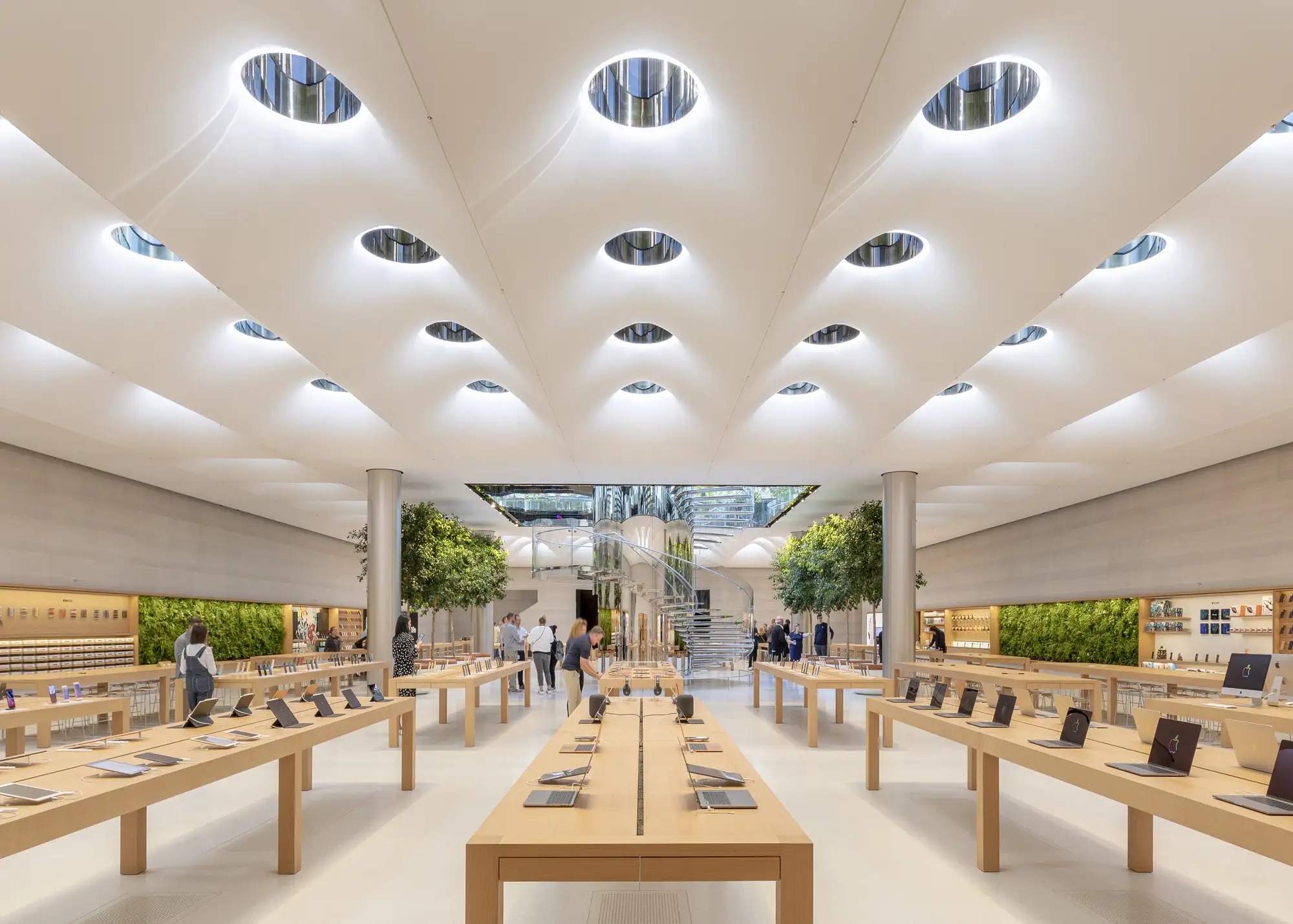
Instead, each display table focuses on a limited number of hero devices, allowing customers to freely interact with them. Lighting, spacing, and product positioning eliminate distractions and encourage hands-on experience. The result is an environment where customers explore naturally, ask more questions, and spend more time engaging with products before making purchasing decisions.
The design feels simple—but every detail is intentional.
Measuring the Success of Visual Merchandising
Many businesses evaluate VM by asking one question: “Does the store look beautiful?”
The more important question is:
- Did store traffic increase?
- Did customers stay longer?
- Did featured products sell faster?
- Did average basket value improve?
- Did customers have a better brand experience?
These are the real indicators of successful Visual Merchandising. Beautiful displays may attract attention, but only strategic displays generate measurable business results.
Visual Merchandising Is an Investment, Not a Decoration
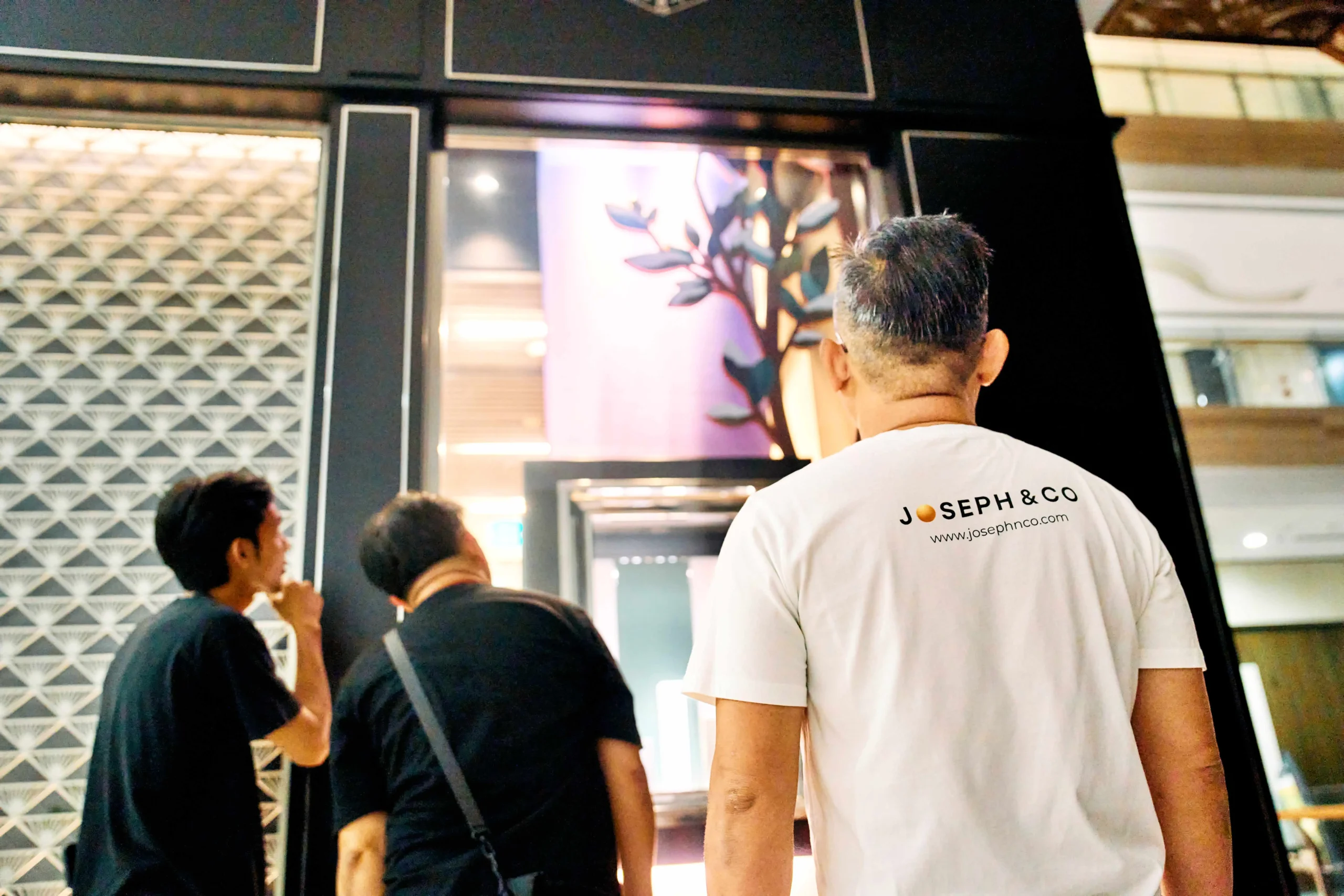
Retail today is more competitive than ever. Customers have unlimited choices, shorter attention spans, and higher expectations. Brands that treat Visual Merchandising as a business strategy create environments that attract attention, strengthen brand perception, and convert visitors into buyers.
At Golden Point, we believe every display should do more than showcase products. It should tell a brand story, guide customer behavior, and create commercial value. Because in the end, the success of Visual Merchandising is not measured by how beautiful a display looks—but by the business performance it delivers.
Explore More with Golden Point

If you’re interested in discovering how thoughtful ideas become immersive brand experiences, explore Golden Point’s portfolio featuring projects across Luxury Retail, Visual Merchandising, Event Production, and Design & Build.
View Our Project Portfolio
https://www.goldenpointgroup.com.vn/projects
Behind every project is our in-house production facility, where we oversee every stage—from concept development and material selection to manufacturing, installation, and final execution—ensuring consistent quality throughout the entire process.
Explore Our In-house Production
https://www.goldenpointgroup.com.vn/production