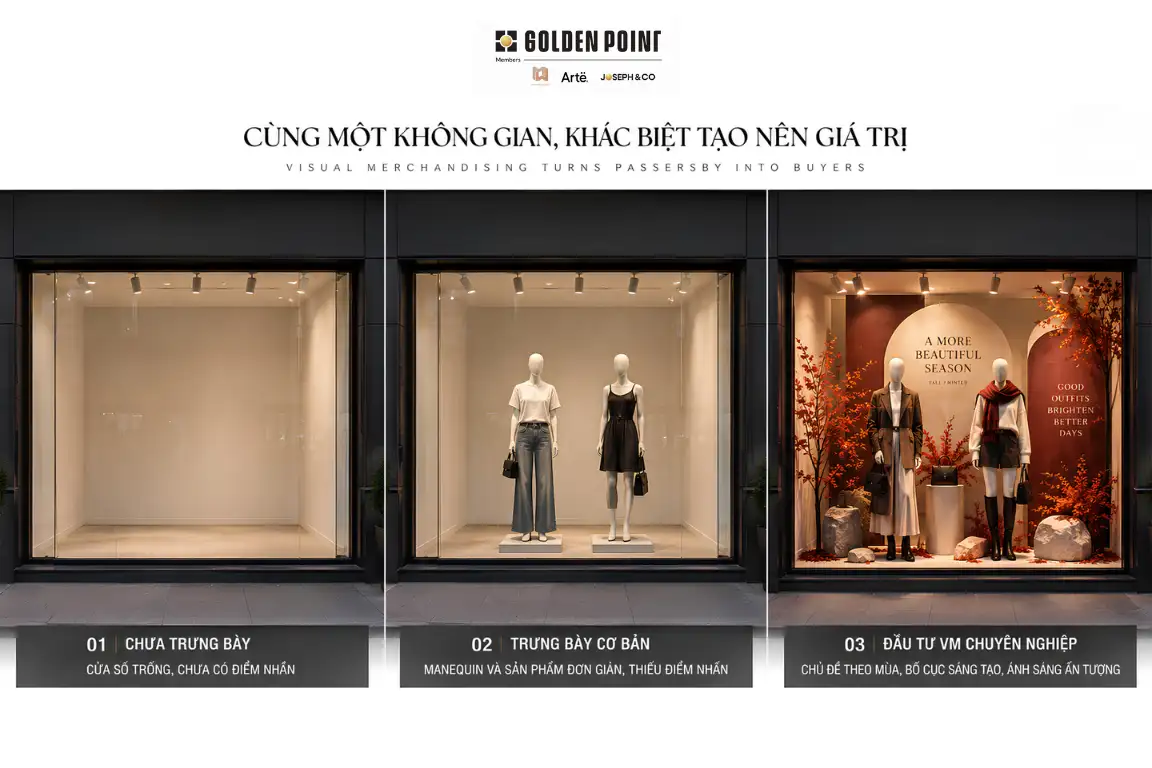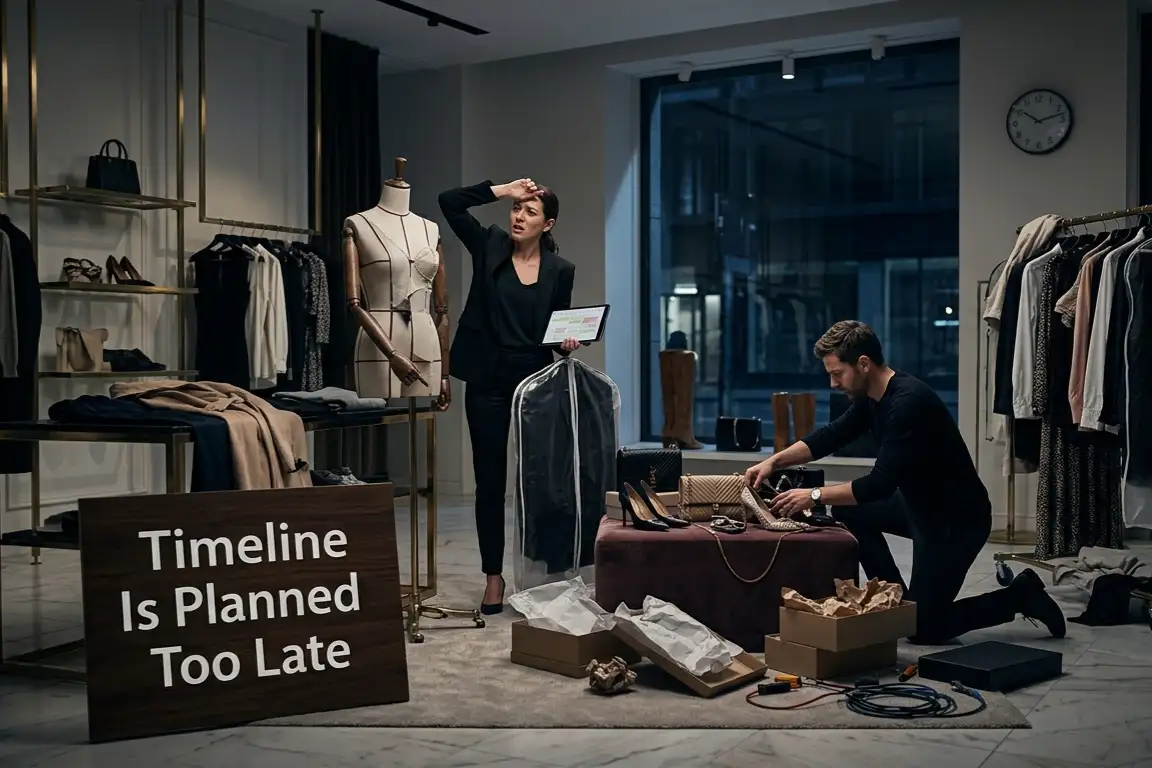
Is a Beautiful Store Enough? When Does a Brand Need Visual Merchandising?
When people hear Visual Merchandising (VM), they often think of large fashion stores, luxury brands with elaborate window displays, carefully planned lighting, and highly developed retail environments. This can easily lead to a common assumption: “VM is only for big brands.”
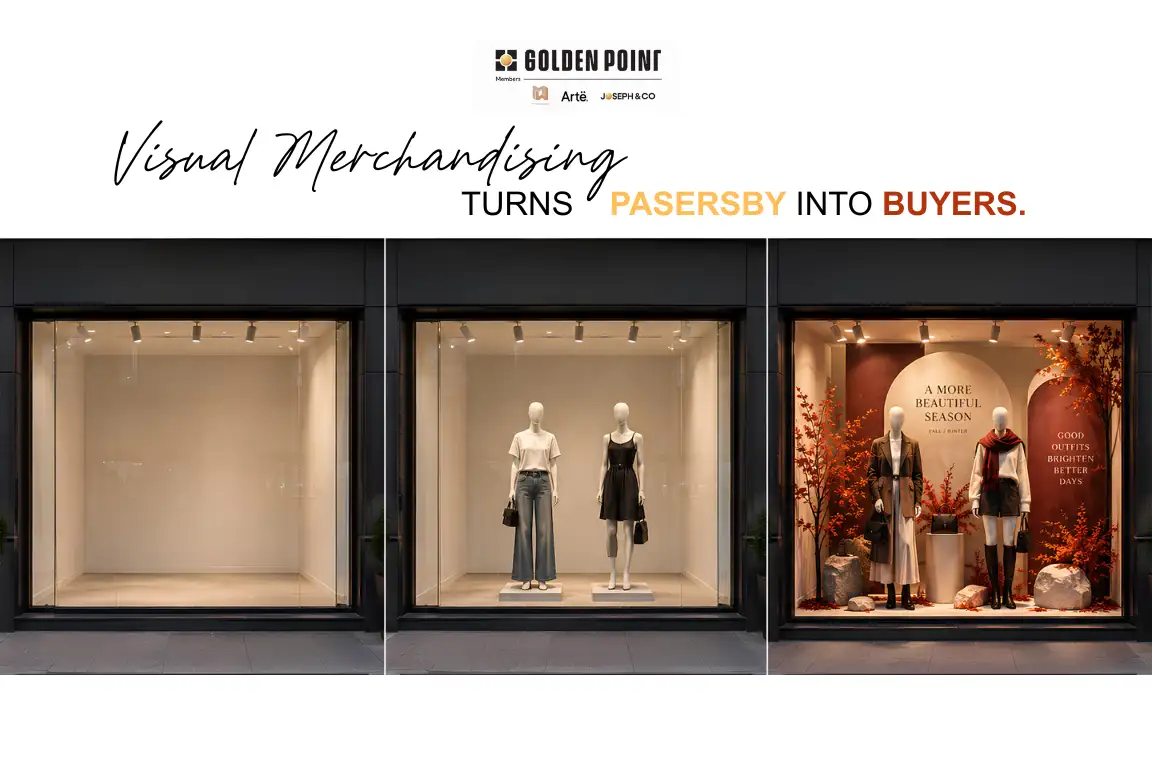
But that is not the case. VM does not start with an expensive store. It starts with how a brand wants customers to see, understand, and experience its products in a physical space.
A local fashion brand with just one 30–50 sqm store is already doing VM, even if the team does not call it Visual Merchandising. The way mannequins are positioned, which products are placed in the first visual zone, how colors are arranged on racks, how lighting is used, and how much space is left between products all shape the customer experience.
So the real question is not: “Is my brand big enough to need VM?”
A better question is: “Does my brand have a physical space where customers experience the product?”
If the answer is yes, VM already matters.
What Is Visual Merchandising, Really?
Visual Merchandising is often understood simply as product display. In practice, it is much broader. VM is how a brand uses space, products, color, lighting, materials, graphics, props, and visual hierarchy to create a consistent brand experience at the point of sale. A good VM system should help customers quickly answer some basic questions:
- What brand is this?
- What is the hero product?
- Where should I look first?
- Where can I find what I need?
- Does this space feel right for me?
That is why VM is not simply about “making a store look better.”
VM turns the selling space into part of the brand.

Why Does a Brand Need VM?
01. Customers See Before They Buy
Before customers read the full story behind a brand, they see the space, the products, and how everything is presented.
A shirt placed on a crowded rack creates a very different impression from the same shirt presented as part of a carefully planned visual composition. The same applies to skincare: a product surrounded by dozens of SKUs feels very different from a hero product placed in a dedicated area with the right lighting and supporting information.
VM helps a brand control what customers see first.
That is one of the most basic, but also one of the most important, functions of Visual Merchandising.
02. VM Turns Products Into a Brand Experience
Two brands can sell similar products and still create very different experiences. Imagine two local fashion brands with collections at a similar price point.
- Brand A uses the same type of rack throughout the store, displays too many products, mixes colors together, and uses inconsistent lighting.
- Brand B limits the number of products on display, uses color blocking, creates a hero zone for the new collection, and maintains a consistent visual language.
Both sell fashion.
But customers can experience the two brands very differently.
VM is one of the tools that turns product presentation into brand experience.
03. Good VM Makes Small Stores Feel More Intentional
This is especially important for local brands.
A small brand does not need a large budget to start applying VM principles. In a 30–50 sqm fashion store, you do not need a complex display system. You can start with some very basic questions:
- Which collection should be prioritized?
- Where is the hero product?
- What does the customer see first when entering the store?
- Which area should be used for new arrivals?
- Should products be grouped by color, collection, or function?
- Where does the fitting room sit within the customer journey?
Simply answering these questions well can make a small space feel much clearer and more intentional.
In other words:
VM is not a game of scale. It is a game of intention.

What Types of Brands Need VM?
Not every brand needs the same level of VM investment. But there are some clear signs that Visual Merchandising has become an important part of the business.
01. Your Brand Has a Physical Store
This is the clearest case. When products are sold in a physical space, the way that space is arranged directly affects how customers discover and interact with the product. You may have a great product, but if customers cannot see it, understand it, or find it easily, its potential is harder to unlock.
VM helps create a visual journey through the store.
02. You Have More Than One Product Category
As a brand grows to include more collections, SKUs, or product categories, simply filling the store with products quickly becomes a problem. At this point, the brand needs a clear logic for deciding:
- Which product is the hero?
- Which product is the supporting product?
- Which products should be displayed together?
- Which products need repetition?
- Which products need negative space to create emphasis?
That is when VM starts functioning as a system, rather than just decoration.
03. Your Brand Has a Distinct Identity
A brand can have a strong visual identity, but if that identity is not reflected in the store, it creates a disconnect.
For example, a brand may position itself as contemporary, minimal, and refined, while the store uses too many colors, graphics, and display elements that do not support that identity. Customers may still recognize the logo. But they may not fully feel the brand language. VM helps bring the brand identity from the logo, packaging, and campaigns into physical space.
04. Your Brand Wants to Move Upmarket
When a local brand starts upgrading its products, pricing, or positioning, the physical retail experience needs to evolve as well. A higher-priced product presented in a cluttered environment, under the wrong lighting, or with poorly controlled presentation can create a gap between brand promise and actual experience. This is where VM becomes part of the brand’s perceived value. Luxury is not only about expensive materials. It is also about consistency, proportion, lighting, spacing, and attention to detail.
05. Your Brand Is Growing Into Multiple Locations
One store can sometimes run based on the judgment of one person. But when a brand grows to five, ten, or twenty stores, that approach no longer works. The brand needs a system:
- Where should the hero product go?
- How many products should be displayed?
- How should seasonal campaigns be adapted?
- How should colors be grouped?
- How should graphics and signage be positioned?
VM guidelines turn these decisions into a system that can be replicated across locations.
At this stage, Visual Merchandising becomes a tool for managing brand consistency, not just a task for the store team.
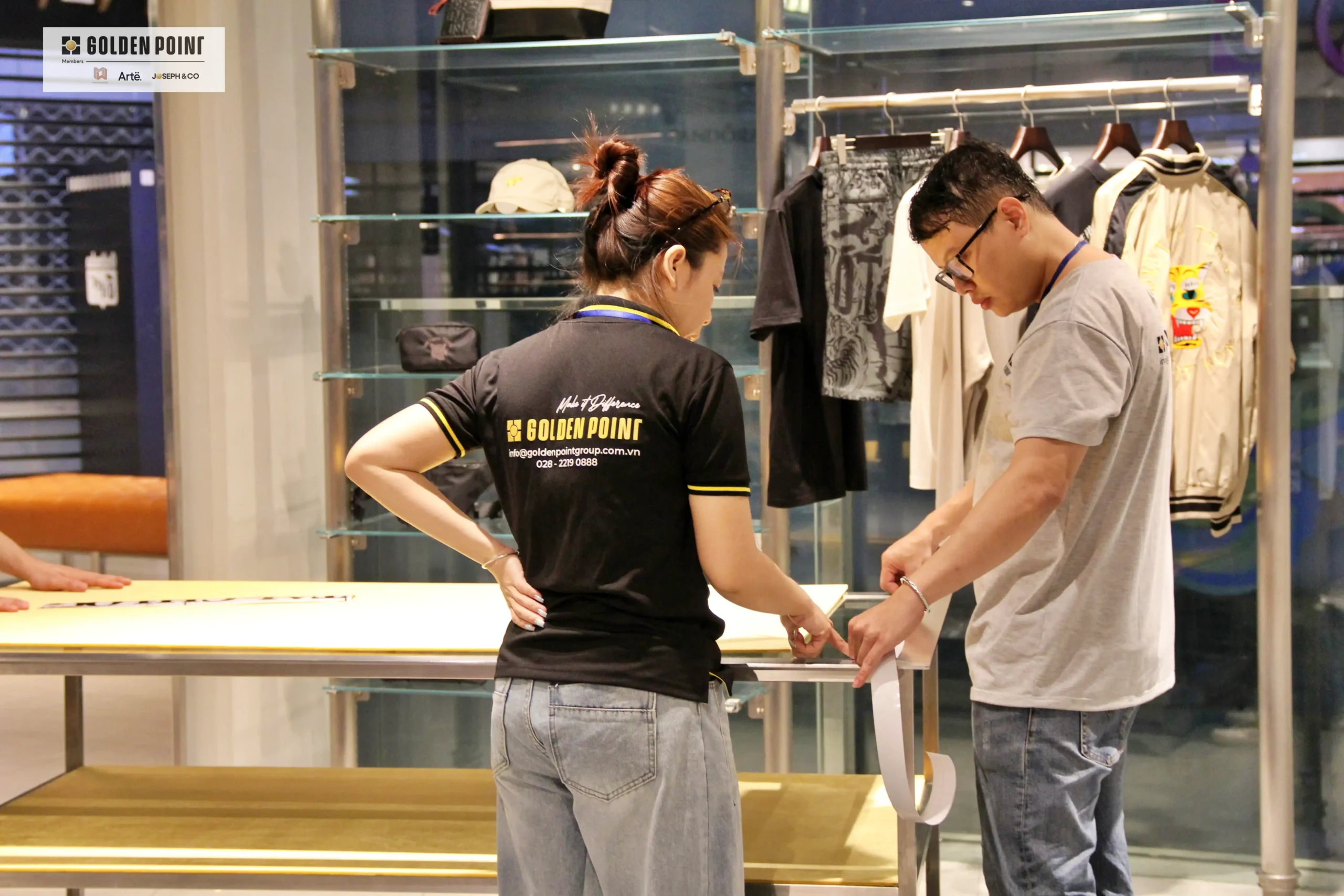
Should a Small Local Brand Start With VM Now?
That does not necessarily mean hiring a full-service VM agency or investing in a large system from day one. What matters first is understanding the basic principles of VM and applying them at the right scale. A small local fashion brand can start with five things:
- Product hierarchy — define which products should be seen first.
- Zoning — divide the space into areas with clear purposes.
- Visual flow — guide customer attention through the space.
- Lighting — make sure products are presented in the right way.
- Consistency — maintain consistent display standards, colors, and visual language.
These things do not require a massive budget. But they do require the brand to think about the experience before simply filling the space.
A Common Mistake: “A Beautiful Store Is Enough”
A store can look beautiful from an interior design perspective and still not be an effective VM environment.
- Interior Design generally focuses on space, architecture, materials, function, and aesthetics.
- VM focuses more directly on product presentation, customer attention, communication, and brand experience at the point of sale.
The two disciplines can overlap, but they are not the same. A store can have marble, brass, wood veneer, and beautiful lighting. But if customers do not know where the new collection is, the hero product is not clearly highlighted, and the visual hierarchy is weak, the space may still not perform its role as a selling environment.
Beautiful is not the same as effective.
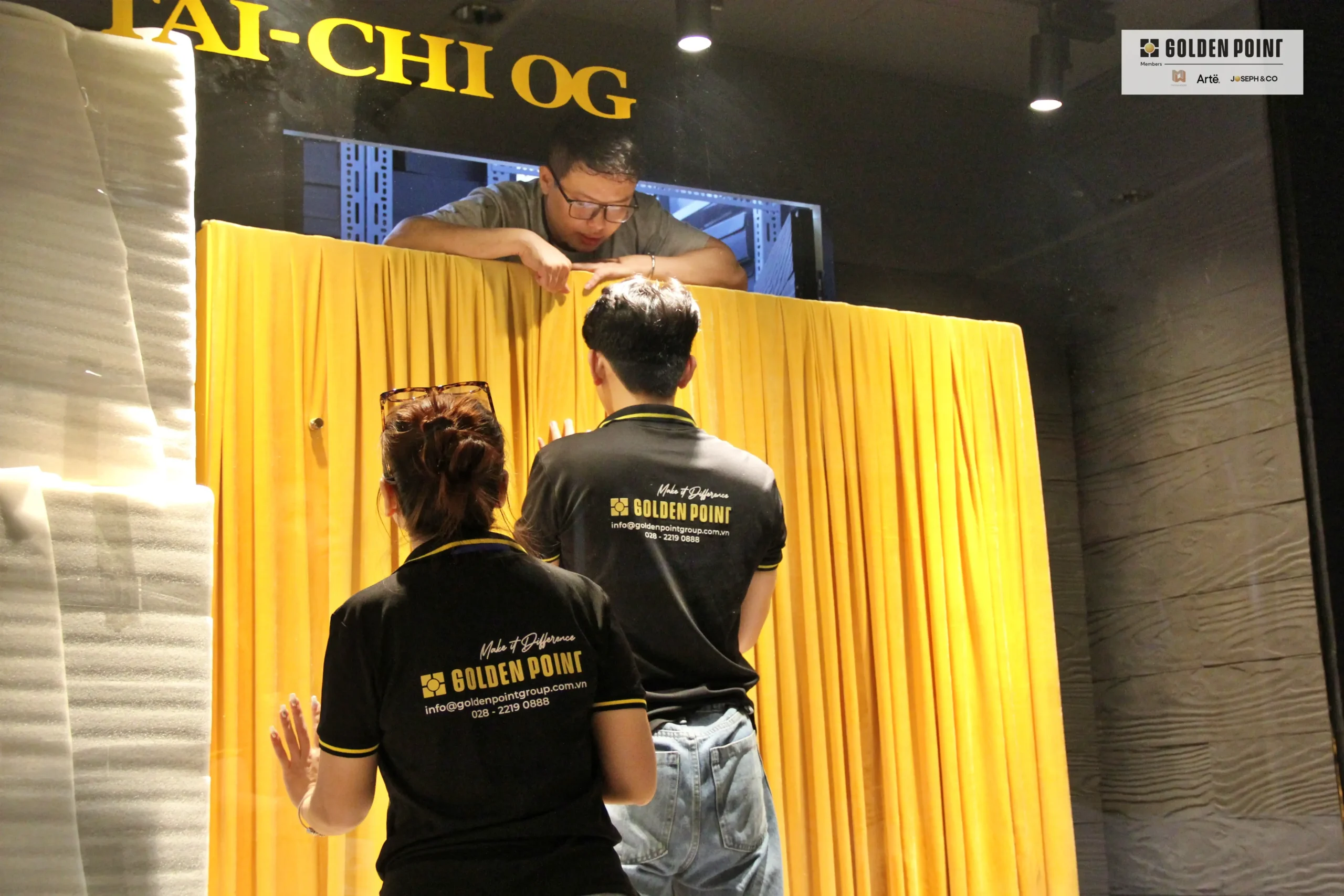
VM Is Not Just for Luxury Brands
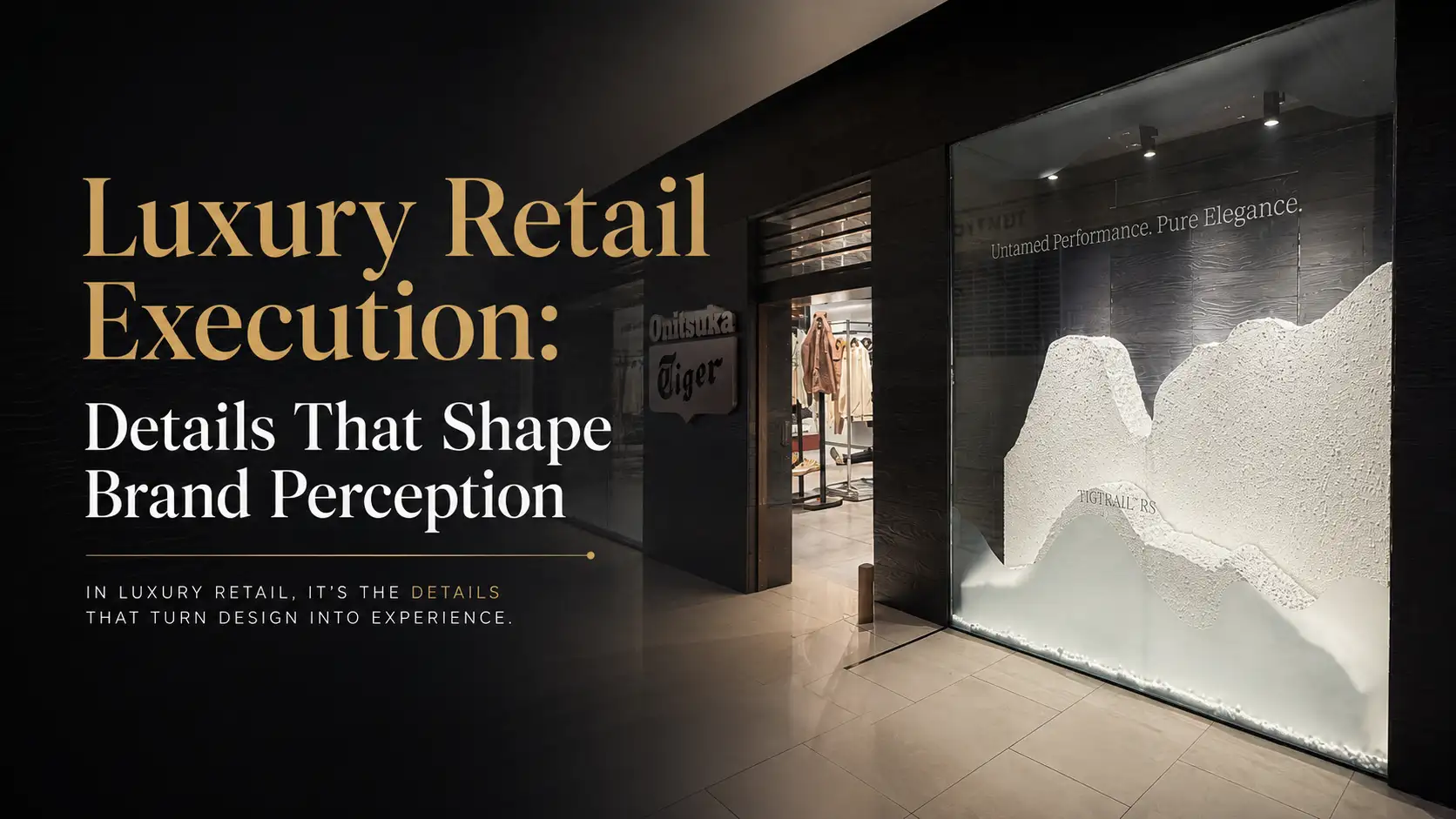
Hermès, Dior, Tiffany & Co., and Onitsuka Tiger may have very high standards for visual consistency and execution. But the principles behind those standards can also apply to a small local brand. The clearer a brand is about:
- Who are we?
- What should customers feel?
- Which products matter most?
- How should customers experience the space?
the stronger the foundation for good VM.
The difference is mainly in scale, complexity, and investment. A luxury brand may need a full VM guideline across multiple markets. A local fashion brand opening its first store may only need a basic display principle. But both are solving the same problem:
How should the brand show up in physical space?
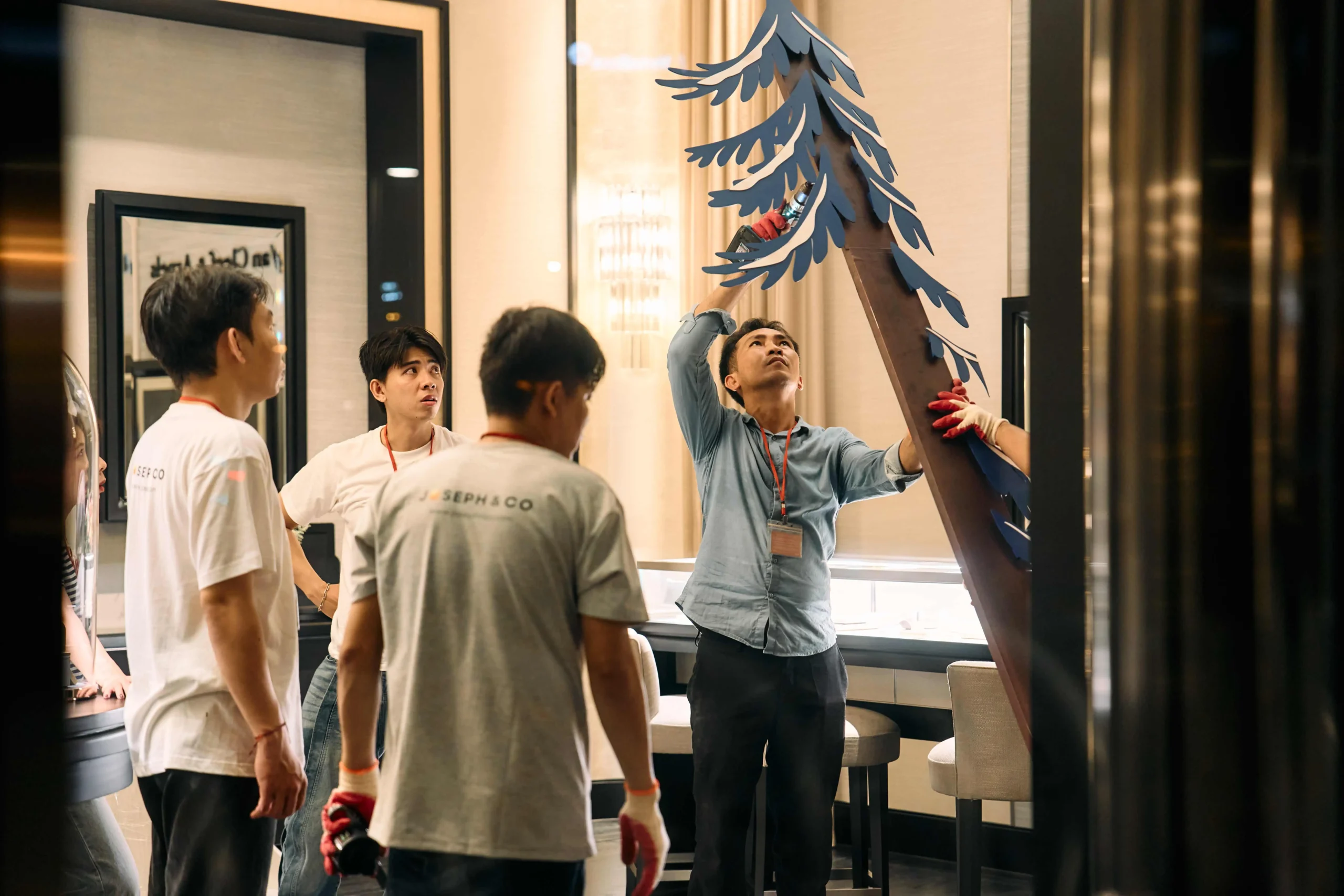
The Right Time to Start VM
VM is not something a brand should only think about once it becomes big. It should start when a brand realizes that the selling space is also a brand touchpoint. You may have one small store. You may have just one collection. You may not have the budget for a fully developed retail environment.
That is okay.
You can still start by defining hero products, creating clear zoning, controlling lighting, organizing products with intention, and building a consistent visual language. As the brand grows, the VM system can grow with it. That is how Visual Merchandising should really be understood:
Not as a layer of decoration added to a store.
But as part of how a brand manages the customer experience at the point of sale.
At Golden Point, we approach Visual Merchandising not only from a design perspective, but through the full process of turning brand ideas into physical experiences — from concept, materials, and technical development to production and installation.
Because a VM idea only creates value when it can be executed accurately, consistently, and true to the brand.
Explore Golden Point’s Visual Merchandising Projects → View Our Projects
Golden Point
Your Strategic VM Execution Partner in Vietnam