In luxury retail, sometimes the smallest details have the biggest impact on how customers see a brand.
When we look at a finished window display or luxury store, we usually notice the concept, product presentation, lighting, and materials first. But for the teams behind production and installation, there is another side of the story that customers rarely see: how to make sure a great design still looks and feels right once it becomes a real, physical space.
This is where small issues start to matter. A printed color may look different from the original file. The existing surface may not be flat enough for installation. A material may look completely different under actual store lighting than it did in the sample. Even an uneven joint can make an otherwise well-executed display feel less refined.
Through our experience across different projects, we have learned that quality in luxury retail rarely comes down to one single detail. It comes from many small details being done right and coming together in the right way. This is why execution plays such an important role in shaping how customers ultimately experience a brand.
01. Color: “Close Enough” Is Sometimes Not Enough
If you have worked with international brand guidelines, you are probably familiar with testing colors several times before reaching the final result. A color on screen, a color after printing, and the same color under actual store lighting do not always look the same. Even when using the same artwork, printing on different materials can produce different results.
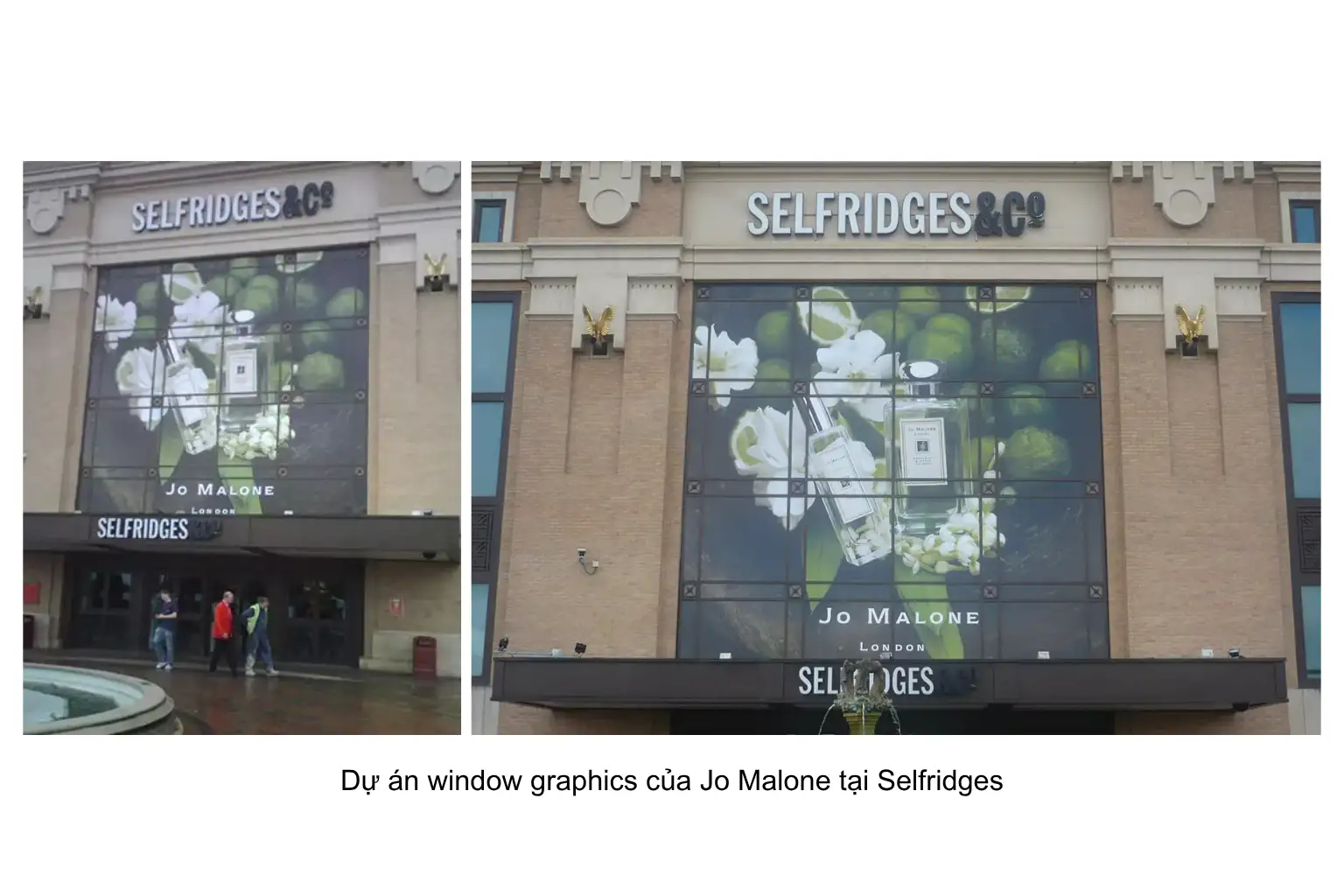
A good example is the Jo Malone window display at Selfridges. Production company Cestrian tested different types of vinyl to find the right solution for the color depth required by the client. The artwork was also divided into 48 individually measured graphic sections so that, once installed across the existing window structure, the final image would still appear seamless.
This is something Golden Point has also experienced while working on Hermès hoarding in Vietnam. Before installation, our team tested and adjusted the printed colors to make sure the final result closely followed the brand guidelines. Once we arrived on site, however, another issue became clear: the existing surface was not flat enough for direct installation. Before thinking about how the graphics would look, the surface itself had to be properly prepared.
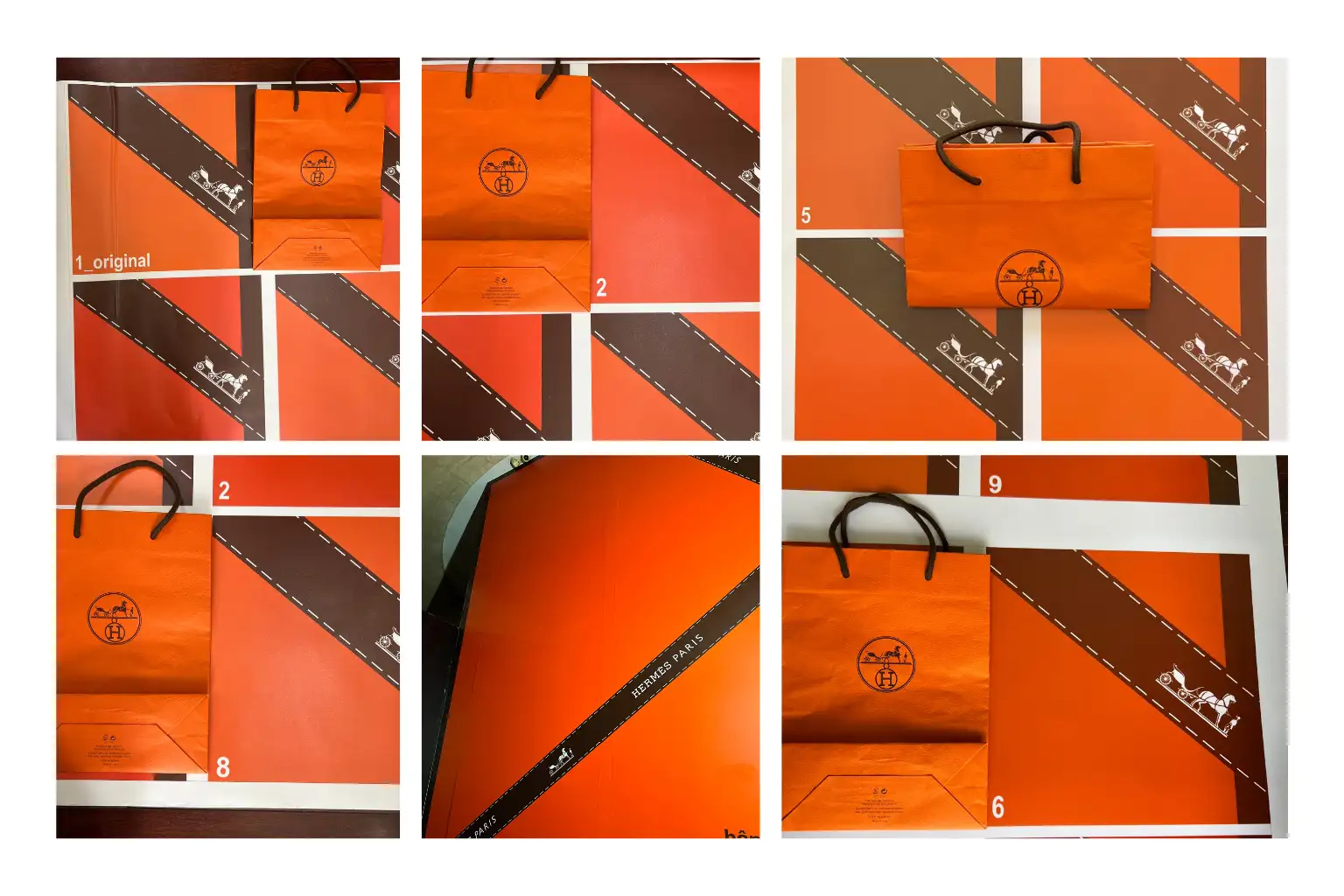
Situations like these remind us of something simple: an accurate artwork file does not automatically guarantee an accurate final result. Between the file and the finished installation are materials, printing equipment, existing site conditions, lighting, installation techniques, and many other variables. The execution team’s job is to manage these variables so that the final result stays as close as possible to what the brand intended.
02. Materials: The Right Material Still Has to Feel Right
When selecting materials for a retail project, we do not only ask, “What material is this?” A more important question is often: “What will it look and feel like once it is finished?”
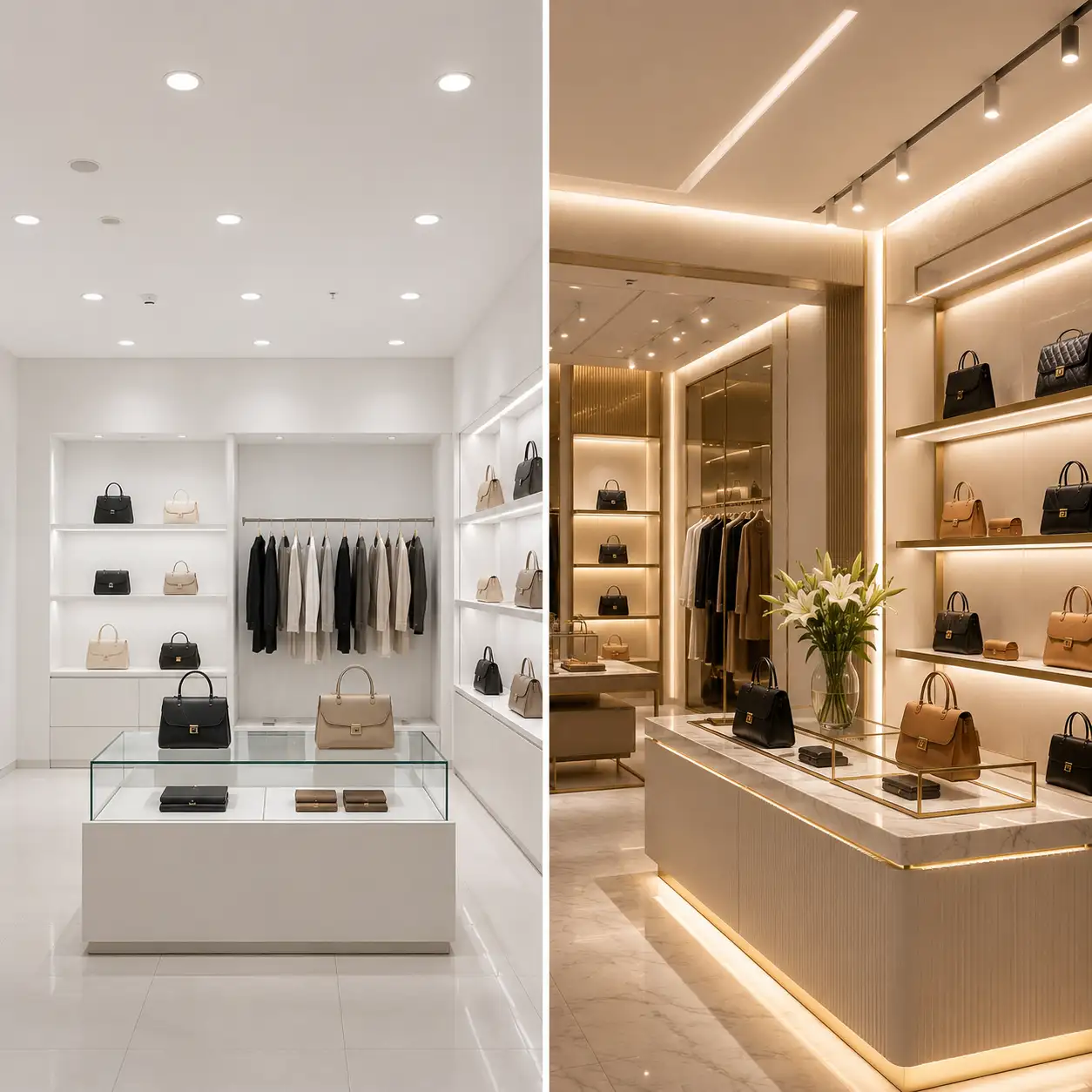
The same metal can create completely different impressions depending on whether it has a brushed or polished finish. A matte and a glossy surface in the same color will react differently to light. Even a subtle texture can change the overall feeling of a display.
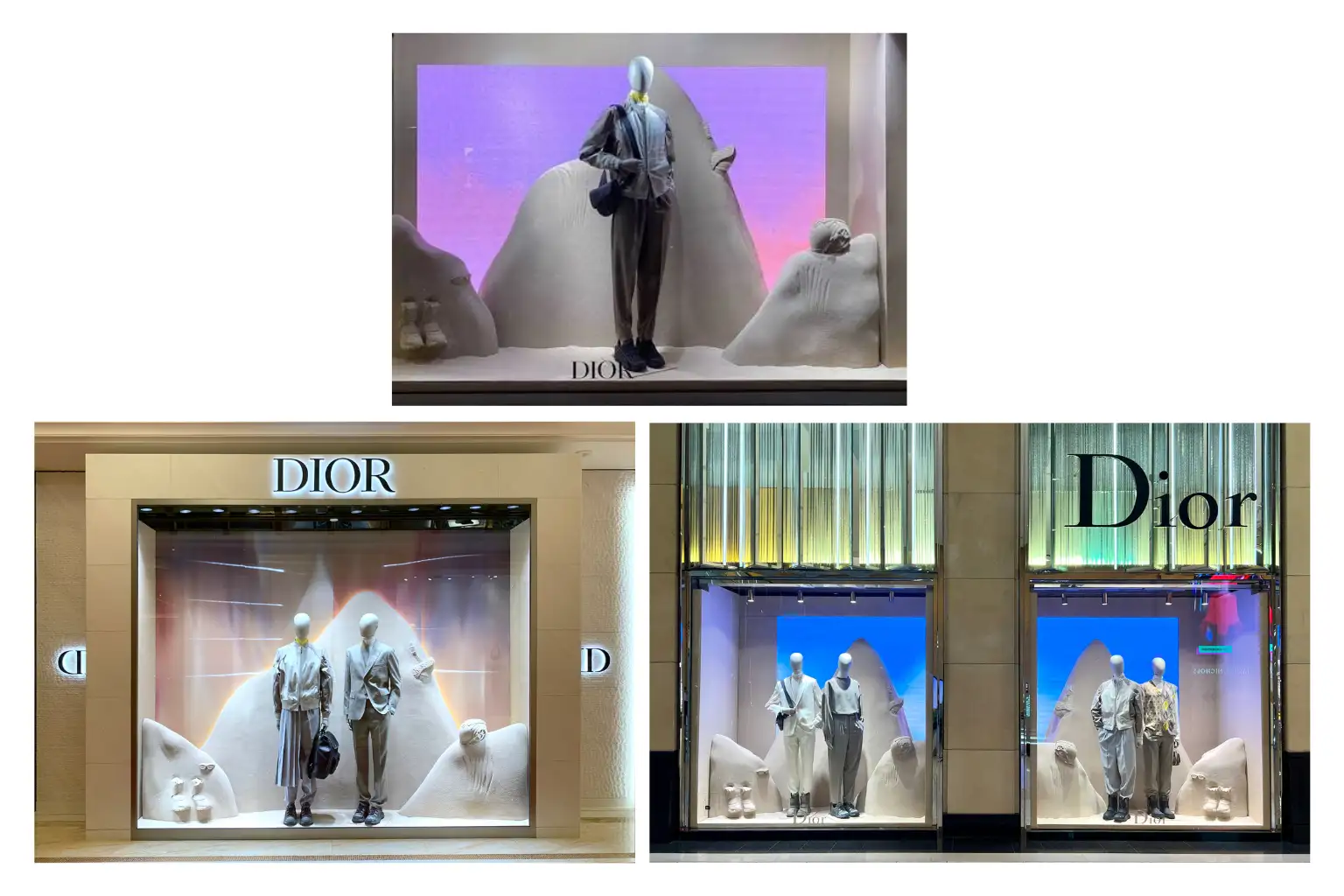
The Dior Men Fall 2023 window display by Joint Production is a good example. The concept was inspired by sand dunes, so the production team did not simply find a material with a similar color and stop there. The sand was dyed to match Dior’s required color, while the 3D-printed props were given additional surface treatment to create a sand-like texture. What we find interesting about this case is that the materials were adapted to serve the concept, rather than changing the concept because of the limitations of readily available materials.
Golden Point faces a similar challenge from a different perspective in our ongoing VM work for Onitsuka Tiger in Vietnam. The concept and color palette change from season to season, with each campaign bringing different requirements for graphics, POSM, window displays, colors, and finishes. As an international brand, these locally produced elements still need to follow the brand’s overall guidelines.
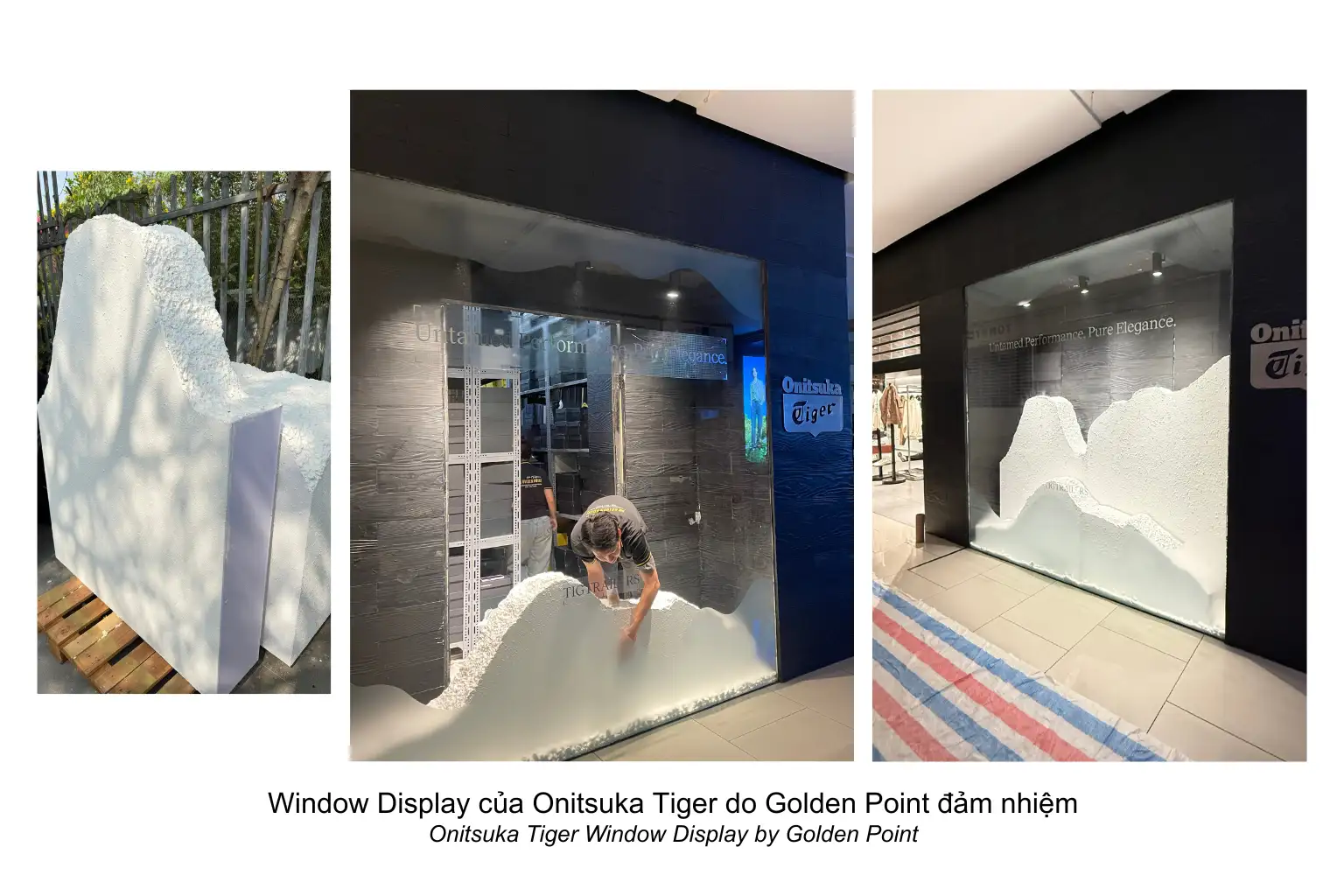
For this reason, choosing a material is not simply about finding something that “looks like the design.” The team also needs to consider whether it can be produced properly, how the color will appear, how the surface will react to light, and whether the finished installation will maintain the feeling intended by the original concept.
03. Precision: Small Differences Are Often More Visible Than We Think
There is something interesting about luxury spaces: the simpler the design, the easier it is to notice imperfections. When a façade consists of only a few clean visual elements, a misaligned graphic, an uneven joint, or an unfinished corner can quickly stand out. This is why an installation that looks simple from the outside may involve a surprising amount of technical work behind the scenes.
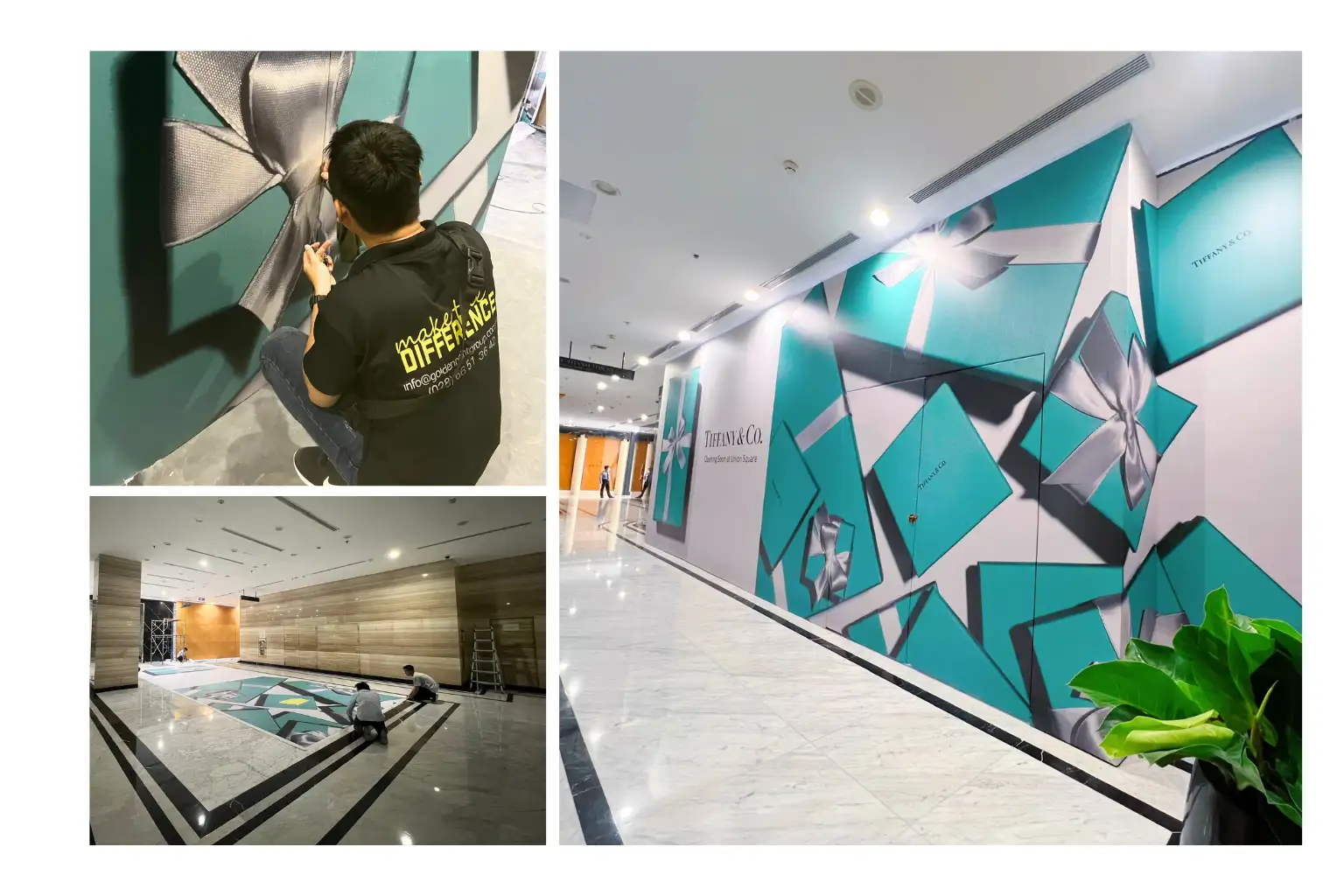
Golden Point encountered this challenge while executing the Tiffany & Co. hoarding at Union Square in Ho Chi Minh City. The existing surface needed to be prepared before installation could begin. Only after that could the team move on to checking colors, aligning the graphics, and controlling the final surface finish.
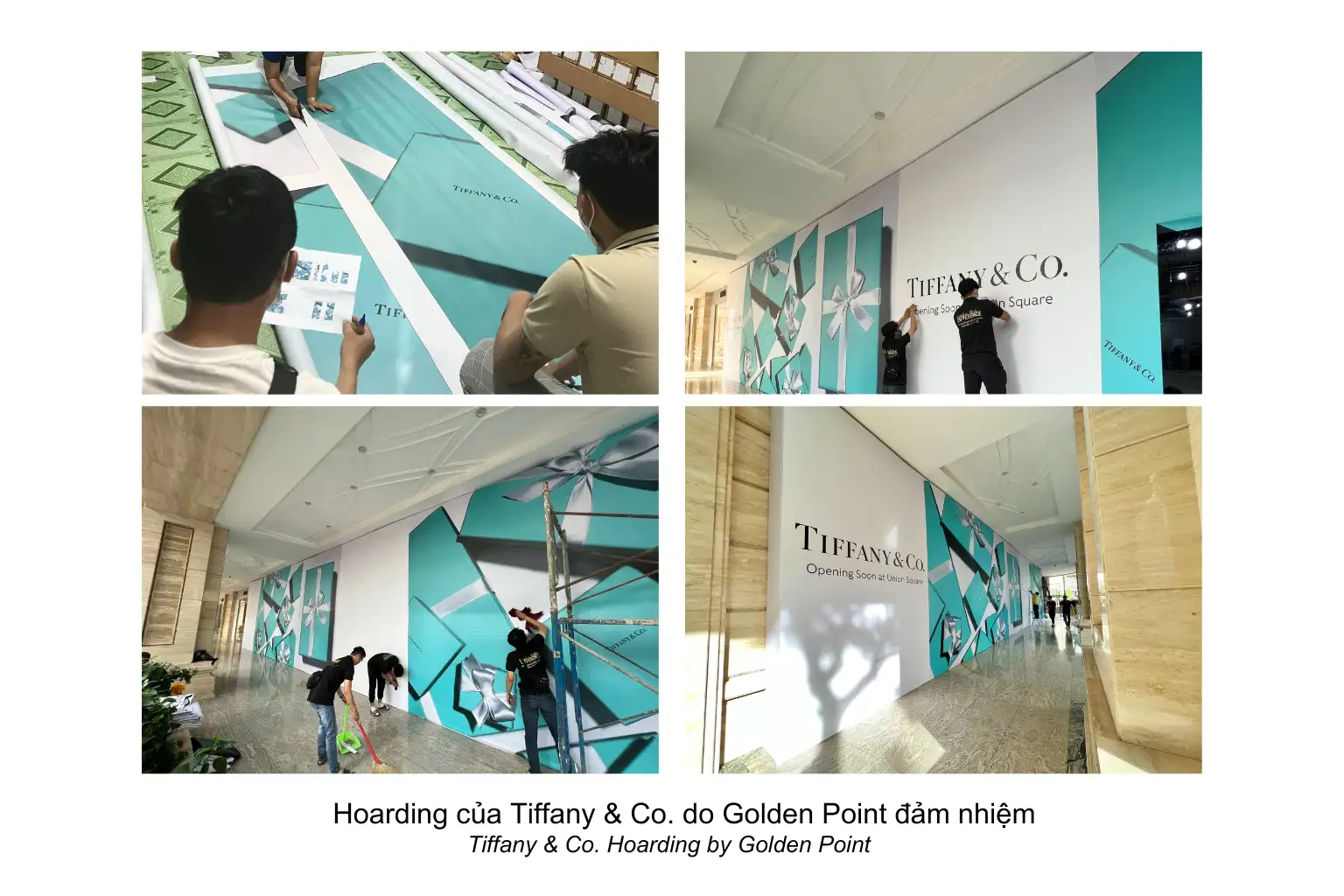
With a large hoarding installation, people walking past do not look at each individual panel. They see one complete image. If one joint is slightly off or part of the graphic is not properly aligned, the eye can often notice that something feels wrong, even if the viewer cannot explain exactly what it is.
That is why teams sometimes spend a great deal of time working on details that customers will barely notice once the project is finished. And in many ways, that is exactly the point.
04. Quality Control: Don’t Wait Until Installation Is Finished
One of the most important lessons in production is simple: the later you discover a problem, the harder it is to fix.
If a color issue is identified during the sampling stage, the sample can be adjusted. But if the same issue is only discovered after all the graphics have been produced and delivered to the site, it becomes a very different problem. Quality control, therefore, should not be something that only happens at the end of a project.
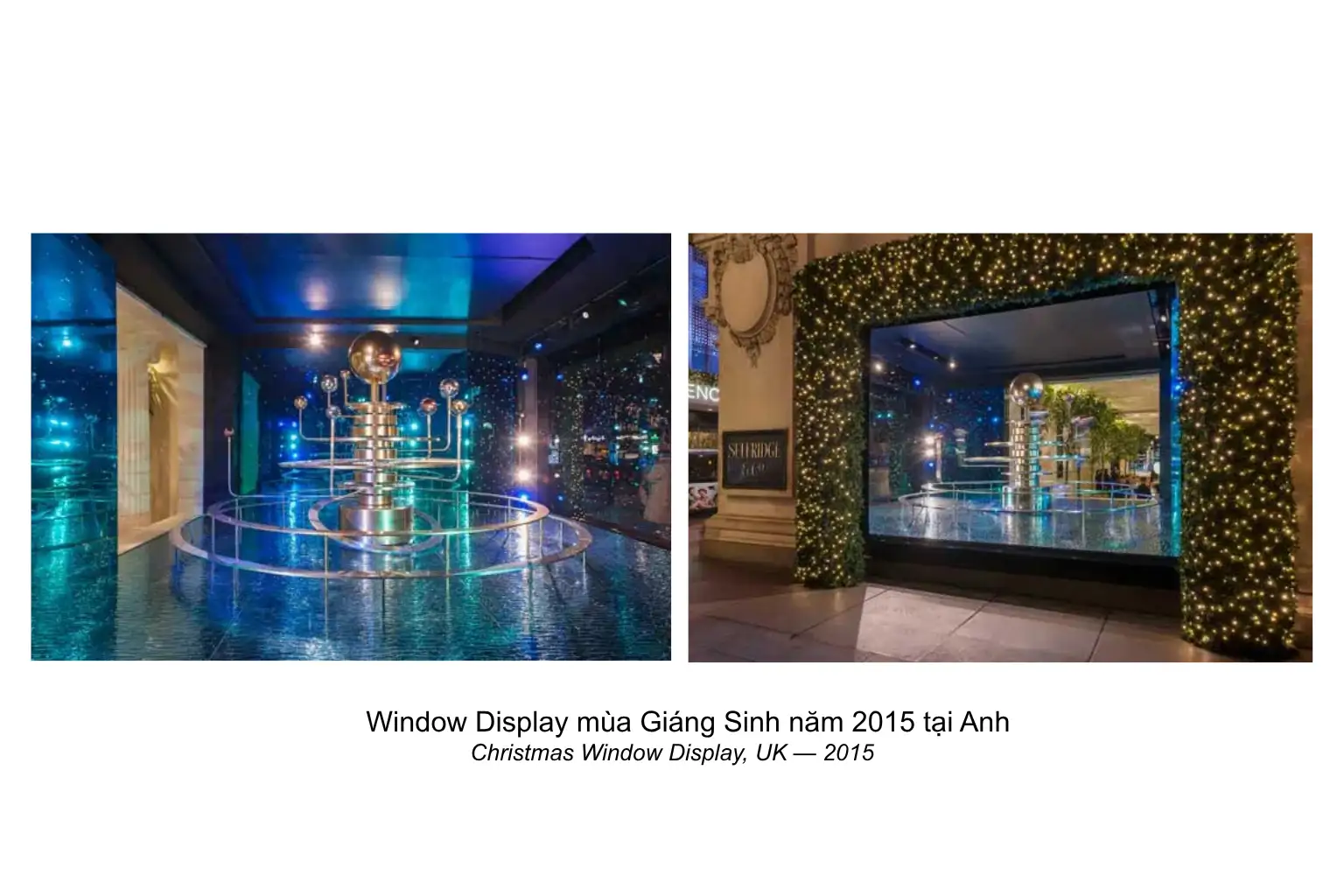
An interesting example is the Selfridges Christmas Window created by Artem. At the center of the installation was a mechanical structure approximately 2.8 meters tall that had to operate continuously every day for around three months. For an installation like this, looking good on opening day was not enough. It also had to continue working reliably throughout the campaign. Artem developed the components and mechanical system in CAD before production, followed by finishing treatments including chrome, reflective gold, and rose gold.
At Golden Point, quality control also begins before our team arrives on site. Production files, color samples, materials, dimensions, and finishes are checked in advance. Once installation begins, the team continues checking alignment, joints, graphic tension, surfaces, and final finishing details. Put simply, instead of: Finish the work → Check we try to work more like this: Check → Produce → Check → Install → Check Again . It may require more attention in the early stages, but it can save a significant amount of time and rework once the project reaches the site.
05. Global Guidelines and the Reality of Local Execution
This is perhaps one of the most interesting parts of working with international brands.
A concept may be developed at a brand’s headquarters and then rolled out across several countries at the same time. The final image needs to remain consistent, but the actual conditions in each market can be very different. Materials may differ. Suppliers are different. Shopping malls have different regulations. Site conditions, logistics, and permitted installation hours can all change from one market to another.
The important point is that the concept remains the same, while the way it is brought to life needs to adapt to local conditions.
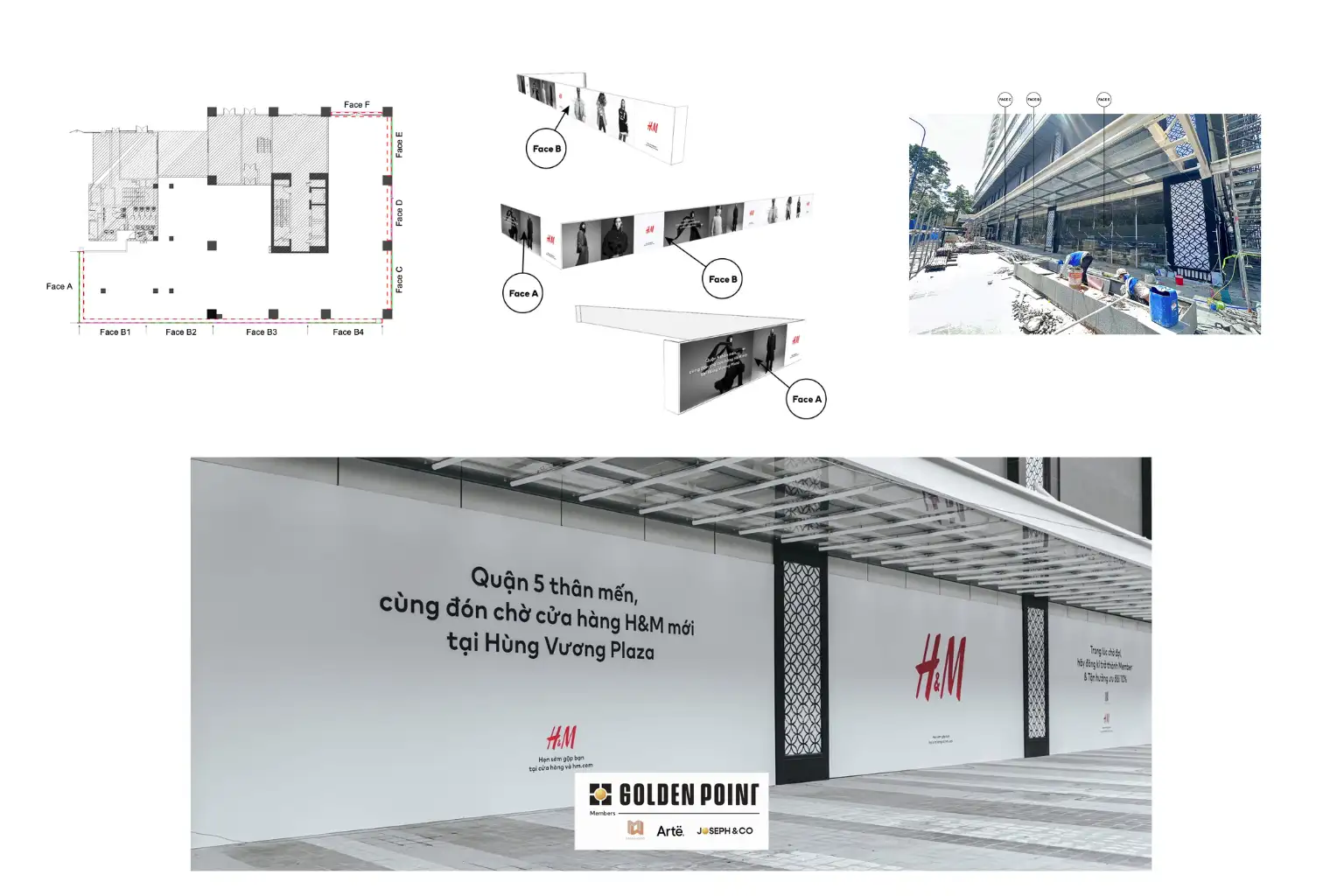
This is something Golden Point regularly works through when supporting international brands in Vietnam. Across projects for Hermès, Tiffany & Co., and Onitsuka Tiger, GP receives the brand guidelines, surveys the actual site, develops suitable material and production solutions, and then manages the installation on site.
Some challenges only become clear once the team reaches the actual location. At that point, the role of a local execution partner is not to change the design simply because it would make production easier. Instead, the question becomes:
“How can we solve the realities of the site while still protecting the original intention of the brand?”
That is one of the most important values a local execution partner can bring.
Luxury Is Not Only About What We Can See
After working across many projects, we have come to realize that some of the things that create a premium feeling are also the hardest things to point out.
Customers may never know how many times a color was tested. They may not know how the surface behind a hoarding installation had to be prepared. They may never see how many prototypes or adjustments were made before a component reached the store.
But when everything is done properly, they can feel the difference.
The right color. A clean surface. A straight joint. A material that reflects just the right amount of light. A precisely aligned graphic. An installation that continues to perform well weeks after launch.
None of these details creates luxury on its own. But when all of these small details are carefully controlled, together they shape how customers perceive the brand.
That is also how Golden Point approaches retail execution. It is not simply about turning a drawing into a finished product. It is about protecting the value of the design throughout the entire journey — from drawing to real-world experience.

From Design to Execution — Golden Point
At Golden Point, a Visual Merchandising project goes beyond simply producing according to a drawing. Our team works across solution development, material selection and control, color testing, production, installation, and final finishing to help ensure that the original design remains consistent when it is brought into the real world.
With experience delivering Window Displays, Hoarding, POSM, Signage, In-store Visuals, and Custom Fabrication for international brands in Vietnam, Golden Point works as a Visual Merchandising execution partner, connecting global brand requirements with local production and installation capabilities.
→ Explore Golden Point’s Visual Merchandising services
→ Discover projects delivered by Golden Point
Have a concept or VM project to execute in Vietnam? Share your brief with Golden Point, and let’s find the right solution to bring it from design to execution.