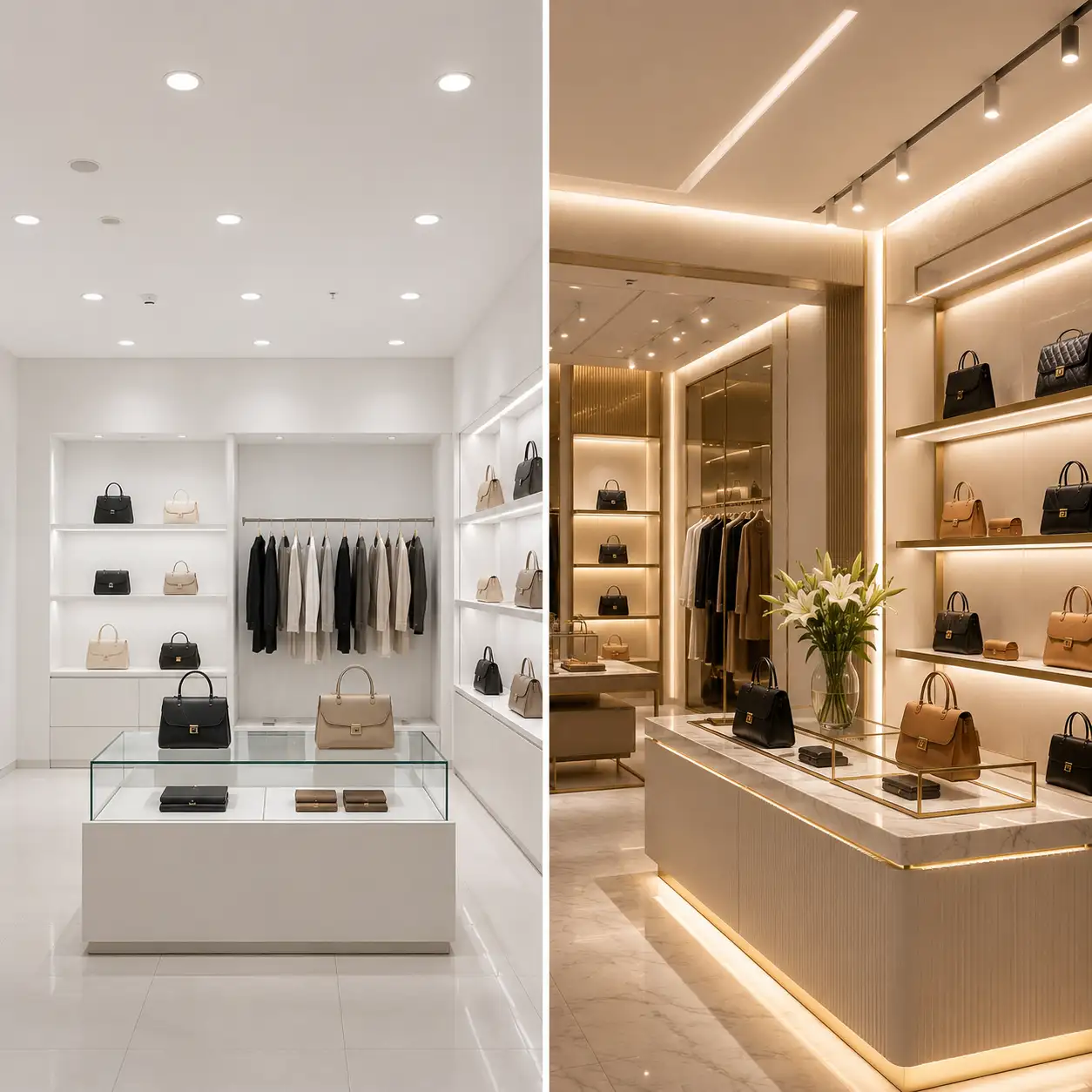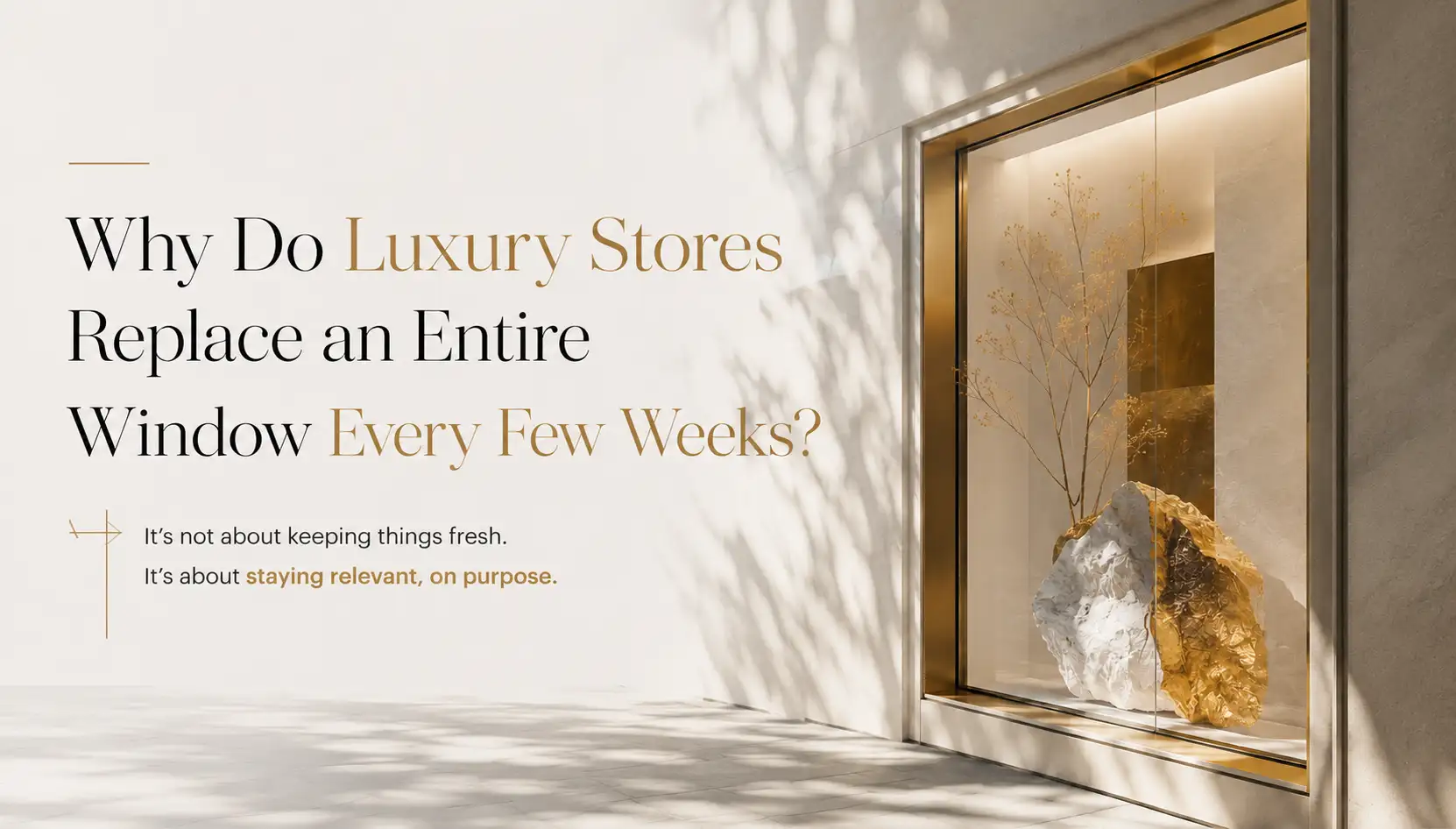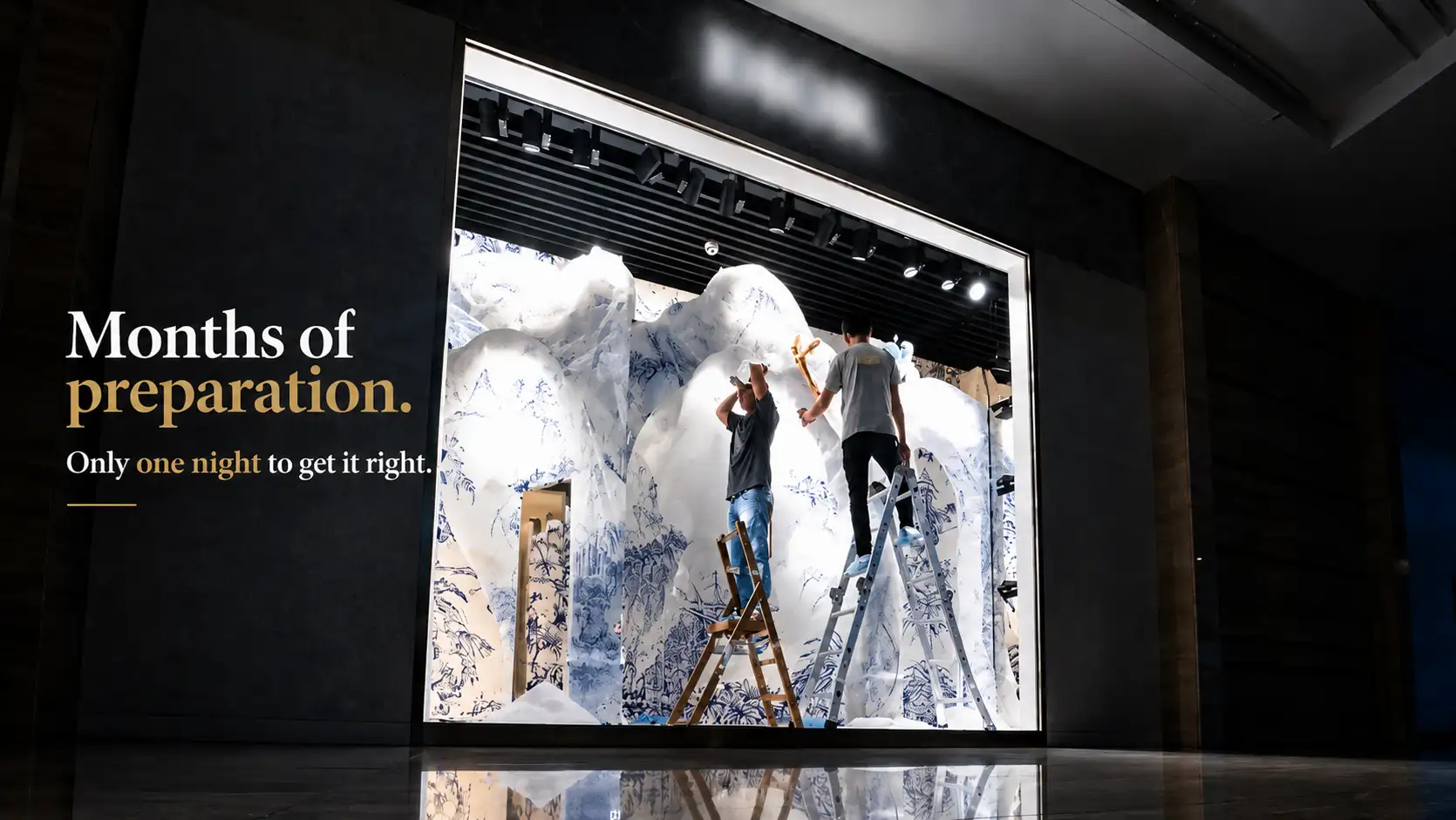
Visual merchandising in luxury retail is far more than product presentation.
For brands such as Prada, lightboxes and window displays are carefully controlled elements of the overall brand experience, where every detail — from lighting to materials — directly influences how customers perceive the brand.
When it comes to luxury lightboxes, the most critical factors are printing technique and lighting control.
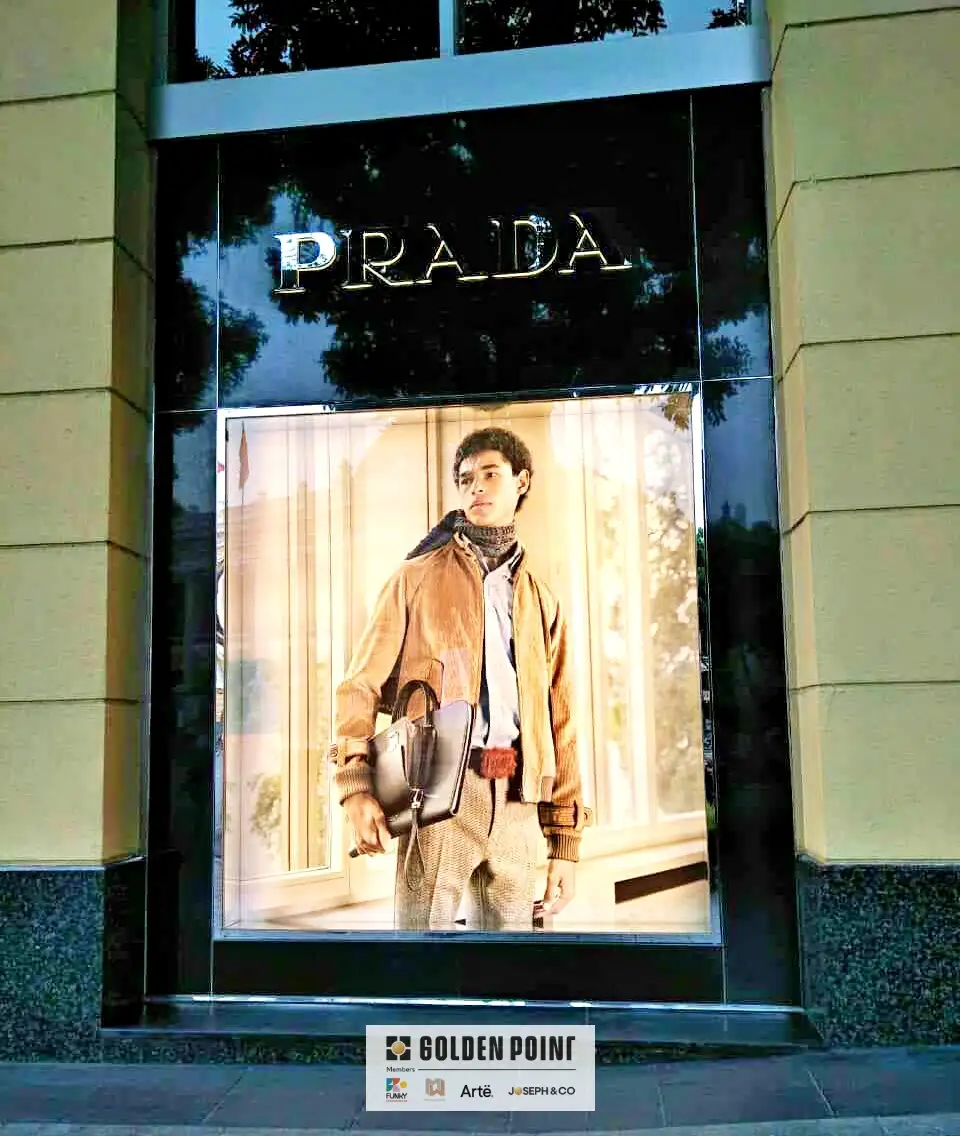
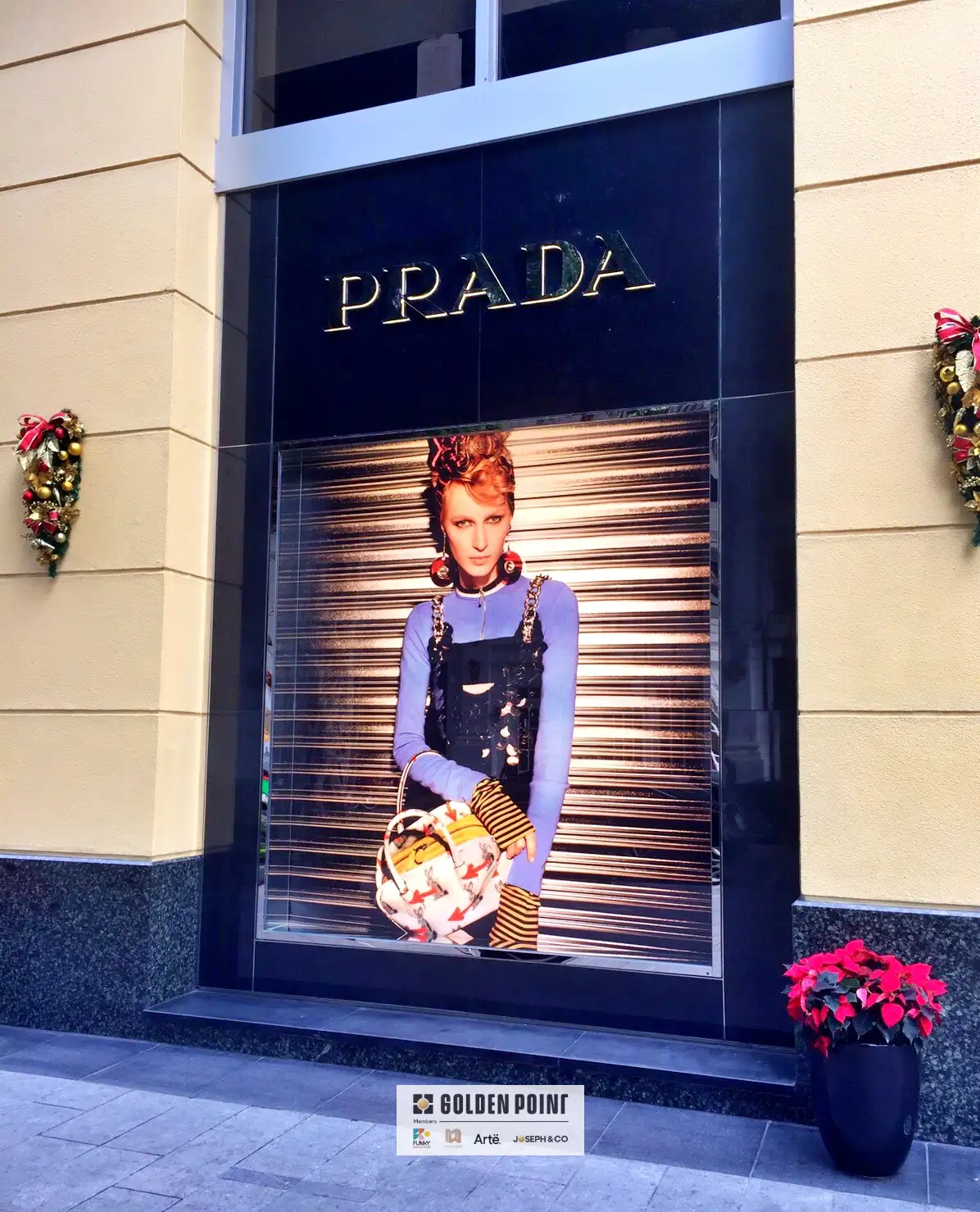
Due to the large-format nature of retail visuals, the printing process must be executed at an extremely slow speed to achieve ultra-fine image density, smooth color transitions, and sharp details once illuminated from behind. Even the slightest inconsistency in grain, saturation, or color balance can immediately diminish the premium feel of the final display.
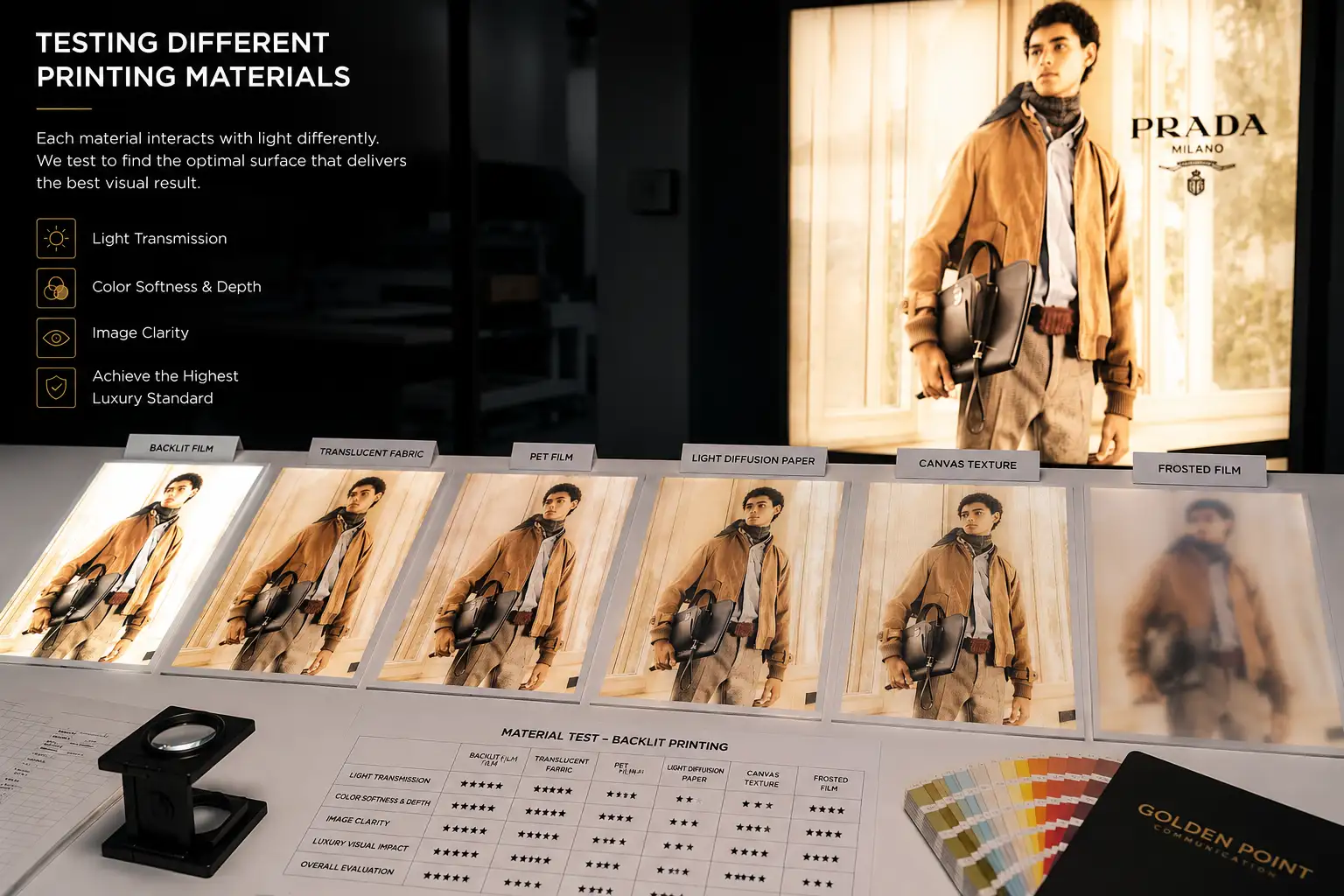
Beyond printing quality, extensive testing across multiple printing materials is essential to determine the most visually refined surface. Each material interacts with light differently:
- light transmission,
- color softness,
- image depth,
- and overall visual perception when viewed in person.
In luxury retail, lighting is never used simply to “brighten” an image.
Color temperature, lighting uniformity, and brightness intensity must accurately reflect the mood, identity, and emotional tone of the campaign itself.
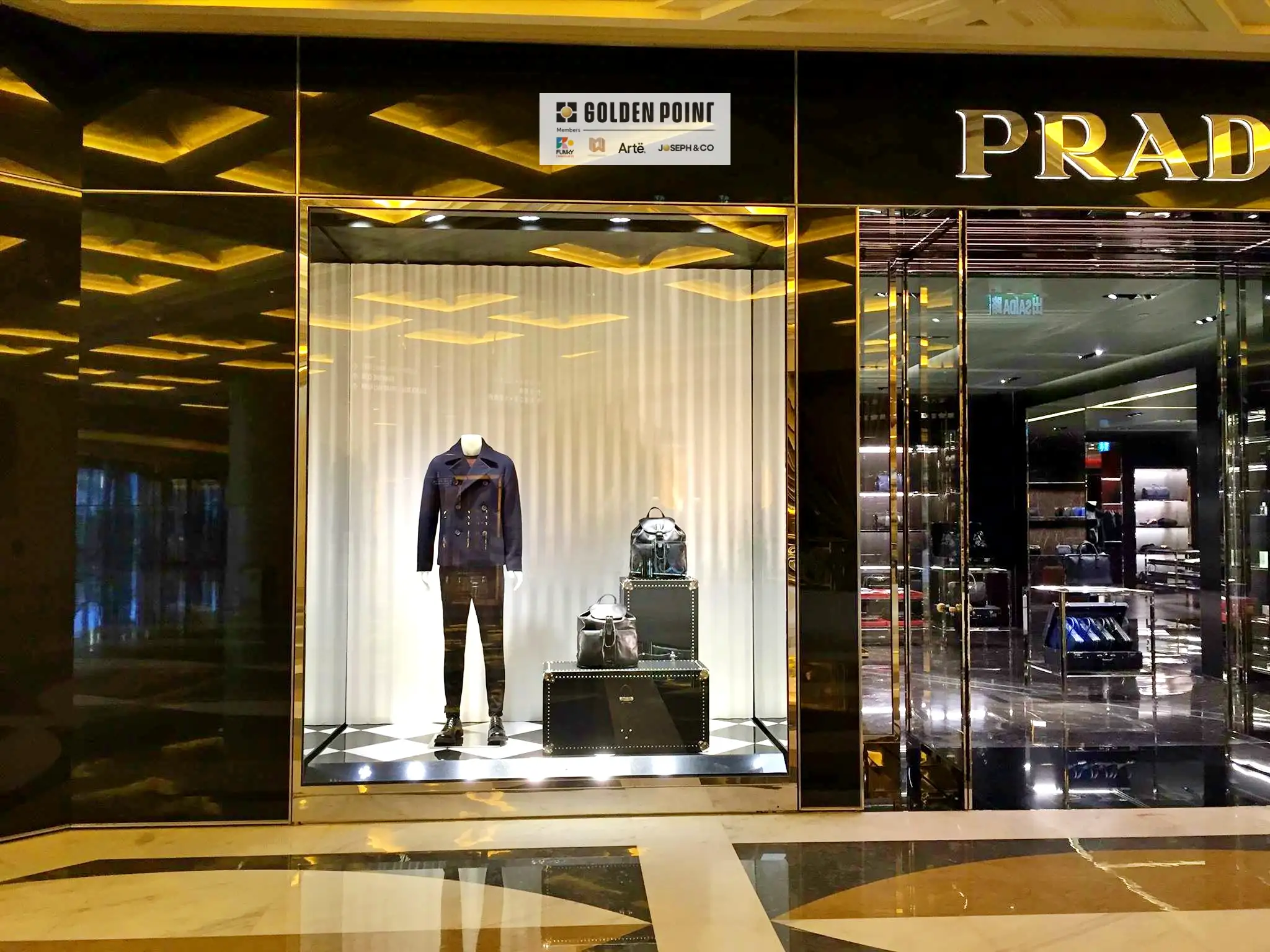
For Prada’s VM installation shown above, the window background was fabricated using CNC-carved wooden panels with flowing wave-like patterns. The level of craftsmanship required for this type of fabrication is extremely demanding, both in precision cutting and surface finishing, to create visual depth while maintaining a soft and elegant appearance.
Decorative props such as the display trunk were also produced to the standard of a real luxury object rather than a simple visual prop.
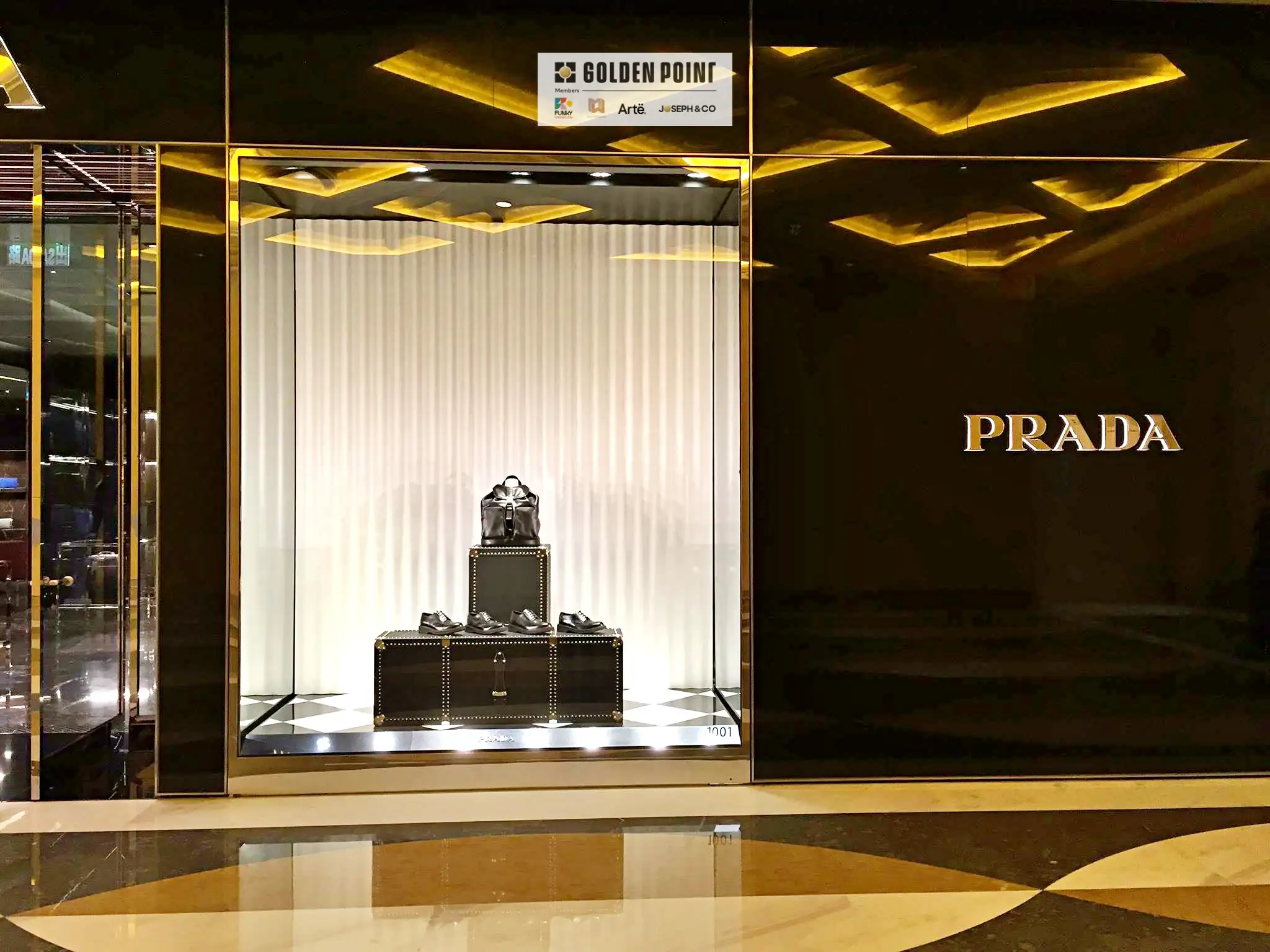
The internal structure was built using wood to achieve the proper weight and stability for display purposes. The exterior surface was wrapped in genuine leather instead of synthetic materials to create a more authentic and premium tactile quality. Metal details, crystal embellishments, and handcrafted finishing were executed with high precision to ensure the final piece felt indistinguishable from a real luxury trunk.
In luxury visual merchandising, value does not come from adding more decorative elements.
It comes from the ability to control materials, lighting, craftsmanship, and finishing at the highest level — creating a sense of refinement that customers can feel instantly, even before interacting with the product itself.
At Golden Point, we believe the true challenge of luxury retail production lies not only in fabrication, but in translating a brand’s visual identity into a physical experience with precision, consistency, and craftsmanship.
Explore more of our Visual Merchandising and luxury retail production projects — from luxury window displays for Dior and Van Cleef & Arpels to hoarding for H&M and other global brands.
Discover more VM projects by Golden Point.